

cc.web.local

twitter Linkedin acp Contact Us

Livestock

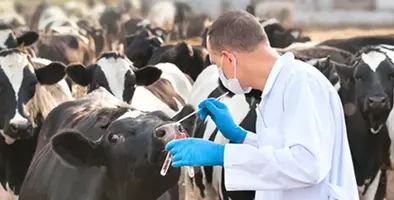
Avian flu viruses is raising concerns over poultry health, food security and regional egg supplies.

Highly pathogenic avian influenza (HPAI) continues to spread across East and West Asia, with new outbreaks affecting poultry farms in countries including the Philippines, Japan, South Korea, Taiwan, Iraq and Israel.

The resurgence of the H5 group of avian flu viruses is raising concerns over poultry health, food security and regional egg supplies.

Among Asian nations, the Philippines has reported the highest number of new poultry outbreaks in recent days. Over the past 10 days, the country’s animal health authorities confirmed 10 outbreaks of HPAI to the World Organisation for Animal Health (WOAH). Most involved the H5N1 virus, particularly in Isabela province in northern Luzon, affecting both large commercial farms and smaller backyard flocks. These latest cases bring the total number of outbreaks on Luzon over the past four years to 293, impacting around 2.35 million birds through culling or mortality.

New detections have also been reported in Mindanao, including South Cotabato, Davao del Sur and North Cotabato, involving grazing ducks infected with H5N1 and H5N8 strains. Authorities cite contact with infected birds and contaminated fomites as the likely sources of infection. As of 31 December, only one active outbreak remains under investigation in Central Luzon.

In Japan, five additional H5N1 outbreaks were confirmed between late December and early January, mainly affecting large laying hen farms. These cases raise the country’s total outbreaks since October to 13, with more than 3.87 million poultry directly affected. Further suspected cases are currently under review.

The spread of avian flu has significantly disrupted South Korea’s egg supply, prompting the government to import over 2.2 million eggs from the United States in January. Since October, South Korea has confirmed 34 poultry outbreaks, including a notable case involving the H5N9 virus, detected for the first time in domestic birds.

Elsewhere in East Asia, Taiwan reported a new H5N1 outbreak in early January, affecting nearly 60,000 laying hens in Chiayi county. In western Asia, H5N1 has re-emerged in Israel and Iraq, with infections linked to contact with wild birds.

With outbreaks spanning multiple regions and virus strains, authorities warn that enhanced biosecurity, surveillance and rapid response will be critical to limiting further spread across Asia’s poultry sector.

Crayfish provide a nutrient-dense, low-impact protein source that requires minimal feed.

The Philippines has taken a decisive step toward strengthening its position in global aquaculture with the launch of its largest crayfish nursery—a flagship development designed to scale production of the high-value Australian Redclaw crayfish.

The project, built through the partnership of Farm Fresh Early Catch Inc., Taiwan’s Da Shin Biotech Ltd., and the Department of Agriculture’s Bureau of Fisheries and Aquatic Resources (DA-BFAR), marks a defining moment for the country’s fast-growing aquaculture sector.

The new nursery will focus on mass-producing Cherax quadricarinatus, a resilient and fast-growing species prized by both domestic and international markets. Government officials say the initiative supports national efforts to strengthen food security while boosting long-term livelihood opportunities in rural areas.

Agriculture Secretary Francisco P. Tiu Laurel Jr., in remarks delivered by Assistant Secretary and spokesman Arnel de Mesa, highlighted the power of collaboration behind the facility. “Built through the partnership of Farm Fresh Early Catch Inc., Da Shin Biotech, and the DA-BFAR, this nursery shows that when government, private innovators, and fisherfolk come together, progress stops being a dream—it becomes our shared reality,” he said.

Tiu Laurel added that crayfish aquaculture “opens new doors for our fisherfolk—bringing in more income, more livelihood, and more food on our tables,” while underscoring the need for responsible production and adherence to BFAR’s ecological protection guidelines. Every pond, he said, must “nurture care, discipline, and respect for the balance of our ecosystems.”

Situated in Candaba - a wetlands area renowned for its freshwater abundance—the 1,280-square-metre facility features 16 tanks capable of producing up to 48,000 fry every two weeks. It also introduces advanced water-recycling systems that help reduce waste and conserve freshwater, addressing one of the most common environmental criticisms of aquaculture operations.

The nursery will supply Farm Fresh’s existing 3-hectare grow-out ponds, which already produce around 30 tonnes of market-ready crayfish each year. It will also support a broad network of partner growers as production expands nationwide.

From 2026, Farm Fresh plans to roll out large-scale grow-out operations covering 1,500 hectares in Luzon and 750 hectares each in the Visayas and Mindanao. When these sites reach full capacity, they are projected to deliver more than 1,200 tonnes of crayfish every six months—volumes that could position the Philippines as a competitive player in the regional and global aquaculture market.

Crayfish provide a nutrient-dense, low-impact protein source that requires minimal feed. The project is expected to generate over 3,000 direct jobs and stimulate additional enterprise in farming communities.

The launch marks the beginning of a world-class crayfish industry designed to place the Philippines firmly on the global aquaculture map.

Hamlet Protein manufactures high-quality soy-based protein ingredients designed for young piglets, poultry, and calves.(Image credit: Hamlet Protein)

Hamlet Protein, a leading global producer of specialty soy-based ingredients for young animal nutrition, proudly served as the Gold Sponsor of the prestigious International Feed Ingredients Course (iFIC) held recently in Bangkok, Thailand

The three-day programme focused on deepening understanding of animal nutrition, feed ingredient application, and sustainable livestock production.

Representatives from Hamlet Protein joined nutritionists, researchers, and industry professionals to exchange ideas on the latest innovations in feed formulation and livestock health. Since its establishment in 2018, the iFIC has grown into a respected international forum where forward-thinking experts collaborate to drive progress across the feed and livestock sectors.

The event featured several renowned speakers, including Dr. Hans Stein, Professor of Animal Nutrition at the University of Illinois, who shared valuable insights into optimising feed efficiency and animal growth.

Simon Martyn, Hamlet Protein’s Commercial Director,  said, “We are proud to be sponsoring the International Feed Ingredients Courses, as their focus on providing insights in the latest research, and on farm experience, with our core values on knowledge sharing. We strongly believe that sharing insights and truly listening to the challenges producers face in today’s market provides a platform for improvement. We do so in the field, and in conferences like these, and that is how we ultimately create value for our customers.”

With production facilities in Denmark and the United States, Hamlet Protein manufactures high-quality soy-based protein ingredients designed for young piglets, poultry, and calves. The company supports farmers and feed producers globally through a dedicated network of distributors and regional sales offices.

For more information, visit www.hamletprotein.com

The future of marine resources.

The Philippines is intensifying its efforts to ratify a landmark international treaty aimed at protecting marine biodiversity in areas beyond national jurisdiction (BBNJ), reinforcing its commitment to ocean conservation and sustainable marine resource management

The Department of Agriculture (DA) has pledged full support to the Department of Foreign Affairs (DFA) in promoting the Senate’s concurrence to the Agreement on the Conservation and Sustainable Use of Marine Biological Diversity of Areas Beyond National Jurisdiction (BBNJ). Signed under the framework of the United Nations Convention on the Law of the Sea (UNCLOS), the BBNJ treaty addresses the conservation and equitable use of marine resources in high seas and other regions beyond exclusive national control.

Although Ferdinand Marcos Jr., President ratified the agreement in 2024-a year after its global adoption - the treaty still requires Senate concurrence before the Philippines can officially participate.

Francisco P. Tiu Laurel Jr., Agriculture Secretary emphasised the agreement's relevance for the Philippines, said, “The BBNJ Agreement is crucial for conserving and sustainably managing marine biodiversity in areas beyond the Philippines’ jurisdiction, allowing the country to safeguard its rich marine ecosystems while ensuring fair access to and equitable sharing of benefits from marine genetic resources.”

As a nation composed of over 7,000 islands and located near areas beyond national jurisdiction (ABNJ), the Philippines has a strong stake in the treaty’s success. It was an early signatory and active participant in the negotiation process, aligning with global conservation goals and the principles of the 2016 South China Sea Arbitration Award.

Undersecretary for Fisheries Drusila Esther Bayate stressed the strategic timing of the ratification: once approved by the Senate, the Philippines will be eligible to participate in the first Conference of Parties (COP1). This milestone event is expected to take place shortly after 60 countries submit their ratification instruments to the United Nations. As of late August, 55 nations have completed the process, with momentum building towards reaching the required threshold during the UN General Assembly from September 23–26.

The BBNJ treaty represents a critical tool for archipelagic nations like the Philippines—not only to influence global marine governance but also to safeguard marine ecosystems, promote fair benefit-sharing, and support the livelihoods of coastal communities reliant on ocean resources.

Automation is increasingly essential to manage labour shortages, enhance precision, and meet hygiene and welfare standards.

The poultry farming equipment market is expected to grow steadily over the next decade, rising from a value of US$4.0bn in 2025 to around US$7.1bn by 2035

This reflects a CAGR of 6.0%, driven by increased global demand for efficient, scalable, and sustainable poultry production systems.

As demand for poultry-based protein grows, both developed and developing markets are investing in smarter and more automated systems. Manufacturers are increasingly focusing on solutions that improve feed efficiency, water conservation, hygiene, and biosecurity. The integration of intelligent technologies, such as IoT-enabled monitoring and predictive maintenance, is playing a key role in transforming poultry operations.

In particular, the watering and feeding systems segment is set to dominate the market by product type, accounting for 22.5% of the market share in 2025. These systems are vital for flock health and are now widely adopted in both broiler and layer production. Advanced features like sensor-based regulation and adjustable flow have helped farms reduce waste, cut labour costs, and improve biosecurity.

The chicken segment continues to lead by poultry type, with a projected market share of 65.0% in 2025. Chicken farming remains popular globally due to its fast production cycles, low input costs, and high efficiency. Equipment manufacturers are tailoring solutions to meet the specific needs of chicken farms, especially in export-driven and urban markets. Vertical integration and demand for traceable, high-quality poultry products are also fuelling investment in standardised, scalable equipment for chicken production.

By mode of operation, automatic systems are expected to take the lead, holding a 48.0% share in 2025. Automation is increasingly essential to manage labour shortages, enhance precision, and meet hygiene and welfare standards. Automatic feeding, egg collection, climate control, and waste management systems are now core to modern poultry farms. Integration with digital platforms and data analytics tools further boosts their value in achieving consistent performance and compliance.

Government initiatives in emerging economies are also contributing to market expansion, particularly in Asia-Pacific, Latin America, and Africa. These initiatives support local farming enterprises and promote automation for increased productivity. At the same time, developed countries are focusing on next-generation farming systems that balance output with sustainability and welfare.

As consumer awareness grows around food safety, animal welfare, and environmental impact, the trend towards cage-free systems and eco-friendly equipment is gaining momentum. With ongoing innovation and rising global demand for poultry products, the poultry farming equipment market is well-positioned for continued expansion.

More Articles …