

cb.web.local

twitter Linkedin acp Contact Us

Technology

Orbia Netafim and Amazon India Launch Water Saving Drip Irrigation Projects Across Bengaluru and Hyderabad. (Image credit: Netafirm)

A new partnership between Orbia Netafim and Amazon India is set to deliver significant water savings through large scale drip irrigation projects across key agricultural regions in India.

The collaboration will help save nearly 325 million litres of water every year while supporting more than 110 independent farmers in the agricultural belts surrounding Bengaluru and Hyderabad.

Announced on 27 February 2026 in Tel Aviv and Bengaluru, the initiative focuses on improving irrigation practices and addressing growing concerns around water security in these rapidly expanding urban regions. The programme will introduce modern drip irrigation systems across 80 hectares of farmland in western Bengaluru and 40 hectares in northern Hyderabad.

In Bengaluru, farms currently growing gourds and tomatoes will transition from traditional flood irrigation methods to more efficient drip irrigation systems. Around 70 independent farmers are expected to benefit from this shift. The change is projected to save approximately 175 million litres of water each year while maintaining crop productivity and improving irrigation efficiency.

In Hyderabad, a similar transition will take place across 40 hectares of maize and vegetable farms, benefiting roughly 40 farmers. The project is expected to conserve about 150 million litres of water annually in the region.

The initiative also contributes to Amazon’s wider environmental commitments. By supporting improved irrigation methods, the company is working towards its goal of becoming water positive in India by 2027. This means returning more water to communities than is used in its direct operations.

Abhinav Singh, Vice President of Operations, Amazon India and Australia, said: "This initiative focuses on practical solutions that make a measurable difference on the ground, helping farmers improve the efficiency of their irrigation systems while contributing to water security in water-stressed regions. We're committed to such collaborations as part of effort to support responsible water use in India”.

Water resources in both Bengaluru and Hyderabad have come under increasing pressure in recent years. In Bengaluru, participating farms rely on water sources linked to the TG Halli Reservoir, which also supplies several residential areas, commercial districts and Amazon facilities across west and north Bengaluru. In Hyderabad, farmers draw water connected to the Kondapochamma Sagar reservoir, an important part of the Kaleshwaram Lift Irrigation Scheme.

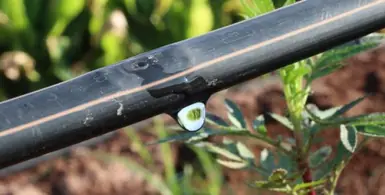
Drip irrigation delivers water directly to the root zone of crops in measured amounts. This method reduces evaporation, runoff and unnecessary water use, which is especially important in regions experiencing irregular rainfall and declining groundwater levels.

“We are proud to collaborate with Amazon on this important initiative, which demonstrates how precision irrigation can deliver real impact for farmers and communities alike,” said Max Moldavsky, Director of Innovation and Climate Solutions, Orbia Netafim. “By helping farmers transition to drip irrigation, we are improving water efficiency, strengthening livelihoods, and contributing to broader water security efforts. This project reflects Orbia Netafim’s long-standing global commitment to water stewardship and climate-resilient agriculture.”

This marks the first collaboration between Amazon India and Orbia Netafim focused on urban water challenges in India’s fast growing cities. Building on previous irrigation modernisation projects in Karnataka, including the Ramthal Community Irrigation Project, Orbia Netafim continues to promote practical and scalable solutions that improve water management while supporting both farming communities and urban water security.

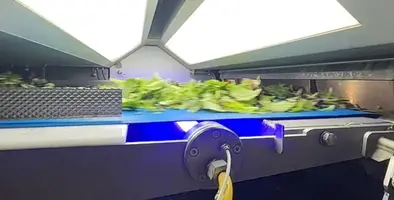
COMPASS accurately detects and removes a wide range of foreign materials, including dirt clods, rocks, sticks, insects and animal parts.(Image credit: Key Technology)

Key Technology (Key), a member of Duravant’s Food Sorting and Handling Group, has introduced its COMPASS optical sorter, a next-generation solution designed specifically for fresh-cut leafy greens processing.

Engineered to inspect product directly from the field, this belt-fed optical sorting system combines high-precision foreign material (FM) detection with gentle, hygienic handling to support food safety and operational efficiency.

Designed for early-stage processing, COMPASS helps processors address one of the most critical challenges in leafy greens operations foreign material contamination while maintaining simplicity and cost-effectiveness. As Jack Lee, Duravant Group President of Food Sorting and Handling, said,“Foreign material is one of the biggest challenges at this early stage of leafy greens processing, but many processors can’t justify the expense or complexity of traditional optical sorting systems. COMPASS changes that,” he said. “It delivers accurate and reliable FM removal in a user-friendly, cost-effective solution engineered to withstand the dirt and debris common at the front end of leafy greens lines.”

Ideal for spinach, arugula, salad mixes and other unwashed leafy greens, COMPASS accurately detects and removes a wide range of foreign materials, including dirt clods, rocks, sticks, insects and animal parts. When processing single varieties, it can also identify and reject product defects, enhancing overall product quality.

To reduce labour dependency and simplify training, COMPASS features a recipe-driven system with a touchscreen interface designed to mirror smartphone navigation. Operators can learn to run the sorter in under 30 minutes, quickly switch between products and create new recipes with ease. Intelligent belt control ensures precise tracking, reducing downtime and eliminating manual adjustments.

COMPASS offers flexible camera configurations with up to eight channels of multispectral sensor data, delivering advanced detection at a lower total cost of ownership. When equipped with Key’s Pixel Fusion technology, the sorter combines visible, infrared and shortwave infrared data to improve contrast and identify even hard-to-detect contaminants. An optional chlorophyll-sensitive channel further enhances detection accuracy.

The system is designed for optimal product flow, using specialised infeed conveying and optional air-assist features to prevent clumping and sticking. Sanitation is prioritised through an open-frame design, sloped surfaces and a clean-in-place system that supports fast, effective washdowns.

Each COMPASS sorter includes Key Discovery, transforming the machine into an IIoT-enabled data hub that provides real-time performance insights and quality analytics helping processors maximise uptime, safety and return on investment.

ROK aims to position itself at the forefront of green bio innovation.

The Ministry of Agriculture, Food and Rural Affairs (MAFRA) has designated seven provinces Gyeonggi-do, Gangwon-do, Chungcheongnam-do, Gyeongsangbuk-do, Gyeongsangnam-do, Jeollabuk-do, and Jeollanam-do as the first-ever “Green Bio Industry Promotion Zones” in accordance with Article 15 of the Act on the Promotion of the Green Bio Industry.

This milestone marks a significant step in the Republic of Korea’s strategy to strengthen its green bioeconomy and drive sustainable industrial growth.

Introduced for the first time this year, the Green Bio Industry Promotion Zone system is designed to establish a comprehensive, region-led framework for business support. The initiative is built around provincial hubs where green bio companies, universities, research institutes, and essential infrastructure for technology verification and certification are closely integrated. Through this clustered approach, local governments are expected to play a leading role in nurturing innovation, accelerating technology transfer, and supporting market-ready solutions.

The selected zones were evaluated and designated following a rigorous assessment process. Key criteria included industrial growth potential, implementation capacity, policy relevance, and overall feasibility. This ensures that each province is well positioned to contribute effectively to the national green bio strategy while leveraging its own regional strengths and resources.

The green-bio industry itself is regarded as a next-generation growth engine, encompassing six major sectors: microorganisms, natural products, food materials, insects, seeds, and veterinary medical products. With the designation of the Green Bio Industry Development Zones, collaboration networks among provinces are expected to deepen. In parallel, processes for verification, evaluation, certification, and commercialisation of green bio technologies and products are set to accelerate, helping to create a dynamic and competitive innovation ecosystem.

MAFRA plans to support the designated provinces by granting eligibility to participate in government-funded infrastructure development projects, including the Green Bio Venture Campus and advanced biofoundries. In addition, policy incentives will be provided to companies operating within the zones, further encouraging private-sector participation and investment in sustainable bio-based industries.

To ensure accountability and continuous improvement, MAFRA will receive quarterly performance reports from the local governments managing the designated zones. Annual performance evaluations will also be conducted to closely monitor implementation progress. Importantly, the results of these evaluations will be reflected in the formulation of policies for the following year, reinforcing a results-driven and adaptive governance approach.

Through these measures, the ROK aims to position itself at the forefront of green bio innovation, fostering regional development while advancing a resilient, sustainable bioeconomy aligned with global green growth trends.
The latest generation of Braud harvesters demonstrates impressive versatility across a wide range of vineyard structures. (Image credit: New Holland)

New Holland Agriculture continues to set new standards in modern viticulture with its acclaimed Braud grape harvester range - a series celebrated globally for precision, productivity and long-lasting reliability.

Built on decades of specialist expertise, the Braud brand has become synonymous with exceptional grape-harvesting performance, and under the New Holland umbrella it remains a trusted partner for winemakers seeking both efficiency and gentle crop handling.

Each Braud harvester reflects a signature blend of engineering excellence and vineyard-friendly design. The machines are created to treat vines with care while delivering powerful harvesting capability, ensuring that grapes are collected cleanly and with minimal damage. This focus on protecting fruit integrity directly enhances vineyard productivity and supports the production of higher-quality wines.

The latest generation of Braud harvesters demonstrates impressive versatility across a wide range of vineyard structures. With both high-capacity and extra-high-capacity models, including the popular 9000 L and 9000 X series, the range adapts effortlessly to narrow boutique vineyards, expansive commercial estates, and even sloped terrain. Their advanced systems  such as the industry-proven Noria basket conveying system, optional destemmer technology, and innovative side-conveyor configurations  ensure consistently clean, gentle and efficient fruit handling.
This adaptability makes Braud harvesters an ideal choice for growers looking to streamline operations while maintaining strict quality standards. Backed by a global legacy and trusted by thousands of vineyard operators, these machines are built to deliver season after season, reducing labour needs, improving harvest speed, and preserving overall vine health.

Engineered for durability and operator comfort, the Braud range combines robust construction with intuitive controls, offering ease of use without compromising on precision. The result is a harvester that not only boosts productivity but also supports sustainable agricultural practices, helping vineyards reduce waste and optimise long-term output.

Choosing a Braud grape harvester means investing in a heritage of innovation, reliability and world-leading vineyard technology  giving growers confidence in every harvest and reinforcing New Holland’s reputation as a champion of next-generation viticulture solutions.

Feeding Management offers significant cost savings, improved transparency of feeding programs.(Image credit: SILOKING)

SILOKING’s Feeding Management platform is transforming livestock nutrition by combining precision, transparency, and convenience in one digital solution

Designed for users of SILOKING Data and Wireless weight systems, this web-based feeding tool enables farmers to manage feed rations, monitor costs, and optimise mixing accuracy—all from any internet-connected device. Best of all, it is included free of charge with compatible SILOKING hardware, making advanced feeding management accessible to modern farms.

The platform operates through four key steps: planning rations, executing feeding operations, controlling results, and driving success. During the planning phase, farmers can define feed components, including dry matter and costs, create custom animal groups or unloading points, and build tailored loading and unloading programs. During feeding, actual loads are captured automatically, mixed, and recorded, with data export available in Excel or PDF formats for easy archiving and reporting.

Control and monitoring are enhanced through precision comparisons of target versus actual feed loads, time-filtered reports, and detailed consumption analyses. These insights feed directly into performance metrics such as feed cost per kilogram of milk, feed efficiency, and concentrate efficiency, helping farms reduce waste and improve productivity.

Being fully web-based, Feeding Management eliminates the need for manual updates and allows access via PC, tablet, or smartphone, whether on the farm, in the office, or even remotely. Optional SIM-based mobile data transfer from on-machine weight systems ensures real-time documentation and seamless integration with SILOKING hardware.

Beyond operational benefits, Feeding Management offers significant cost savings, improved transparency of feeding programs, and enhanced compliance with dairy industry regulations and quality assurance programs. By aligning feed mixes with planned rations and analysing load data, farms achieve higher efficiency and better animal performance while minimising waste.

Designed with direct input from farmers, the platform features intuitive dashboards, intelligent recipe management, and actionable analytics, making deviations easier to identify and corrective measures simpler to implement. SILOKING Feeding Management is more than software—it’s a comprehensive tool for smarter feeding and better farm management, bringing precision, efficiency, and profitability to modern livestock operations.


More Articles …