

vb

twitter Linkedin acp Contact Us

Food & Commodity

With the introduction of MycoPrime, NoMy aims to differentiate itself from other mycoprotein producers by offering a scalable, licensable end-to-end upcycling service. (Image source: Adobe Stock)

Oslo-based fermentation technology firm Norwegian Mycelium (NoMy) is expanding into Japan with the establishment of its subsidiary, NoMy Japan KK

Based in Sapporo, Hokkaido, NoMy Japan was founded in January 2024 and has already formed strategic alliances to enhance its fermentation technology operations, which focus on upcycling food industry side streams. Notable collaborations include a strategic alliance with Nippon Beet Sugar Manufacturing Co. Ltd, one of Japan’s leading beet sugar producers, and a feasibility study with Hokuren, a major farmer cooperative in Hokkaido known for its extensive agricultural activities. Further collaborations are still under wraps and will be disclosed at a later date, as indicated by NoMy.

The company is also launching its MycoPrime service, a upcycling solution that integrates data science, fermentation technology, and artificial intelligence. MycoPrime is designed to assist food industry partners in optimising the use of side streams, reducing waste and CO2 emissions, maximising water recycling, and developing co-located production facilities for high-value, sustainable, fungi-based products. With the introduction of MycoPrime, NoMy aims to differentiate itself from other mycoprotein producers by offering a scalable, licensable end-to-end upcycling service, leveraging its proprietary technology to deliver global solutions.

David Andrew Quist, co-founder and chief explorer at NoMy, expressed, “We are thrilled to announce NoMy Japan KK and introduce our MycoPrime upcycling concept to the world. There is a massive need and opportunity to de-risk the development of sustainable upcycling solutions and bring them to life. With NoMy’s technology and MycoPrime, the food industry now has a reliable, end-to-end partner to create value instead of waste, and become a pioneer in food system transformation.”

Dr Shu Ishikuri, President of Nippon Beet Sugar Manufacturing Co. Ltd, shared, “Our goal is to create a new industry utilising sugar beets, which have high carbon dioxide absorption capacity. NoMy’s technology, which utilises the byproduct of the sugar manufacturing process to produce filamentous fungal protein as a food resource, has great potential to produce feed and food substitutes for animal protein. We believe that this technology will help to promote agriculture and solve food problems.”

Norwegian Mycelium’s CEO, Ingrid Dynna, emphasised, “Through the launch of MycoPrime and partnerships with Japanese companies, we foresee strong growth and impact for our solutions in Japan, and become the premier service provider for upcycling food industry sidestreams in this important market.”

 

China is willing to work with Zambia to make good use of the FOCAC platform. (Image source: Adobe Stock)

Chinese Ambassador Han Jing exchanged his views on China-Zambia agricultural cooperation during a courtesy call 26 August, on Minister of Agriculture of Zambia, Reuben Phiri 

China's is optimistic about Zambia's agricultural investment prospects and is willing to work alongside Zambia to utilise the platform of Forum on China-Africa Cooperation (FOCAC), to promote more joint agricultural projects in Zambia and more exports of Zambian agricultural products to China to benefit the two peoples.

The Ministry of Zambia has rendered strong support, in turn guarenteeing the implementation of the consensus reached by the two heads of state and further deepening of the comprehensive strategic and cooperative partnership between China and Zambia.

Minister Phiri stated that Zambia-China agricultural cooperation has yielded fruitful results under the strategic guidance of the two heads of state and welcomed Ambassador Han to assume his office. This opens a gateway for Chinese businesses to invest in Zambia's agricultural sector, with the upcoming FOCAC Summit hoping to serve as a mutually beneficial, win-win cooperation between the two countries in the field of modern agriculture. 

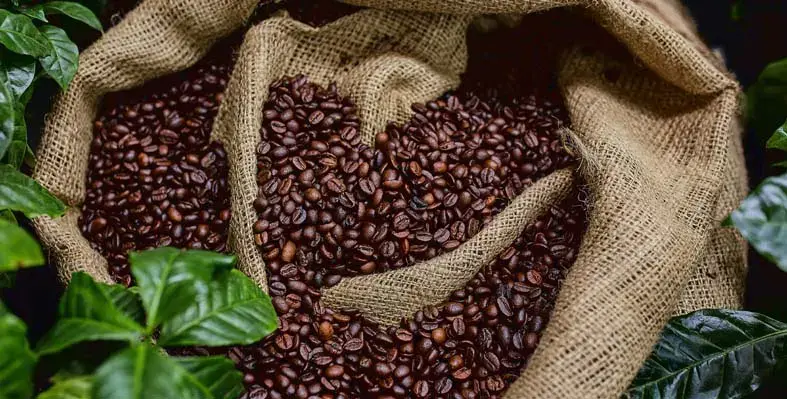
China has become one of the primary importers of Ethiopian coffee. (Image source: Adobe Stock)

In recent years, Ethiopian coffee has been gaining widespread popularity in the Chinese market, mainly through platforms such as the China International Import Expo (CIIE) as well as cross-border e-commerce

While Roasted coffee beans from the Ethiopian coffee brand Gera was showcased at the third CIIE, Ethiopian highland coffee with vibrant orange packaging was showcased at an e-commerce live stream during the fifth edition of the expo. As the popularity of Ethiopian coffee kept growing, online sales of the product saw a surge of 300% during the expo’s sixth edition. 

Expressing great delight, Ethiopian ambassador to China, Tefera Derbew Yimam, noted that China has become one of the primary importers of Ethiopian coffee. "The embassy will continue to facilitate Ethiopian business participation in the expo," Yimam said.

Besides coffee, other products like sesame seeds and green beans from Ethiopia have also made their way to supermarkets, stores, and retail markets in China. 

The seventh edition of CIIE is scheduled to take place from 5-10 November this year in Shanghai, China. For more information, visit: https://www.ciie.org/

Gabriel H. Salee receives the Donated KR Food Aid Rice from Mochizuki Hisanobu. (Image source: Minister of Foreign Affairs, Liberia)

The formal handover ceremony of rice to the Government of Liberia (GOL) took place on 18 June at the Ministry of Foreign Affairs in Monrovia, and stands as a significant gesture of international cooperation and goodwill

The donated KR Food Aid rice is a vital food staple for many Liberians. It is expected to bolster food security and provide relief to vulnerable populations across the country. 

Noting that the donation aligns with the ARREST Agenda of the government, the acting Minister of Foreign Affairs, Gabriel H Salee, expressed deep gratitude to the Government and people of Japan for their unwavering support and solidarity. She further emphasised that Japan’s assistance reflected their commitment to international cooperation and humanitarian aid. 

"Today's donation is a testament to the strong and enduring friendship between Liberia and Japan,” stated Minister Salee. This generous contribution will go a long way in addressing the food needs of our people, particularly those who are most vulnerable.“

Mochizuki Hisanobu, Ambassador of Japan to the Republic of Liberia, presented the rice carrying a value of US$1.5mn, on behalf of the Japanese Government. According to him, the Food Assistance programme has been one of the sustainable means of raising revenue through the Counterpart Value Fund to tackle the Government of Liberia’s ARREST developmental initiatives and also address cross-cutting challenges to the survival, livelihood and the dignity of people. 

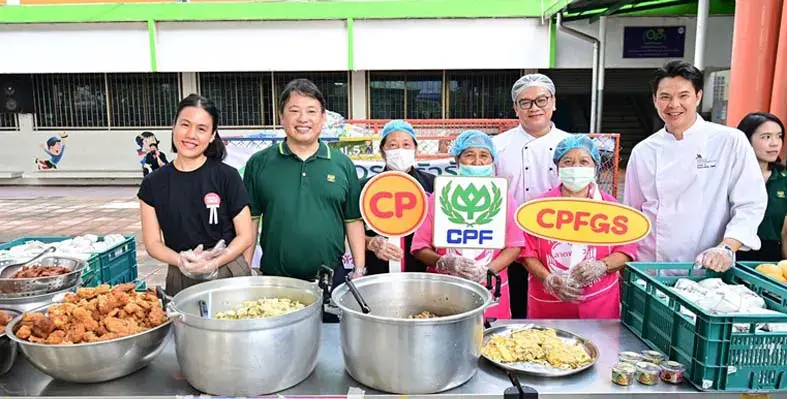
The partnership aims to eradicate food waste to landfills. (Image source: CP Foods)

Dedicated to managing surplus food and reducing food loss, Charoen Pokphand Foods Public Company Limited (CP Foods) spearheads its involvement in the ‘Thailand's Food Bank’ initiative

The partnership involving the National Science and Technology Development Agency (NSTDA), the SOS Foundation, and private sector partners, aims to eradicate food waste to landfills. 

CPF Global Food Solution Public Co., Ltd. (CPFGS), the leading global food solutions provider engaged in food products and services under CP Foods, has implemented comprehensive measures to minimise food waste.

By employing meticulous inventory management strategies and extending product lifecycles through proper handling and storage, CPFGS aims to significantly curb the volume of surplus food designated for disposal. When surplus inventory is unavoidable, the company actively seeks opportunities to repurpose safe, high-quality food items through partnerships with charitable organisations and food redistribution programmes.

As part of Thailand's Food Bank project, CP Foods has implemented robust measures to minimise food waste throughout its supply chain, including optimised inventory planning, effective shelf-life management, and diverting safe, high-quality surplus food to vulnerable communities.

"At CP Foods, we prioritise responsible production and consumption practices, setting an ambitious target of Zero Food Waste to Landfill," affirmed director of logistics and distribution centres at CPFGS, Tawit Thanhakarnjanakul. “We stand ready to collaborate and contribute our expertise in studying innovative approaches to effectively manage surplus food and reduce food waste across the nation.”

For more information, visit: www.cpfworldwide.com/

More Articles …