

vb

twitter Linkedin acp Contact Us

Selecting a moisture sensor for grain processing goes beyond finding an instrument that measures water content

Moisture directly affects product quality, energy consumption, throughput, and waste at every stage — from intake and drying through to milling, blending, and packaging. The right sensor should support process control, perform reliably in demanding conditions, and integrate simply with existing systems.

Here are eight key considerations to guide your selection.

1. Start with your process demands

Define your operating conditions before evaluating any sensor. Consider the material being measured, installation location, how quickly moisture changes, control system requirements, and whether multiple grain types or recipes are involved.

2. Prioritise measurement speed for real-time control

Inline measurement is essential for closed-loop control. It allows the system to react as conditions change, maintaining target moisture rather than responding to drift after it has occurred -- particularly critical in drying operations where incoming moisture can vary significantly.

3. Require robust construction

Grain processing environments involve dust, vibration, impact, and temperature variation. Build quality directly determines whether a sensor remains reliable over its operational life and minimises unplanned downtime.

4. Ensure stable, linear output

A linear response simplifies calibration and gives operators greater confidence in the data. Consider how output behaves over time and how easily the sensor can be recalibrated as products change.

5. Choose straightforward integration

Look for standard communication interfaces and compatibility with existing PLC or control systems. Simple integration reduces engineering effort and accelerates return on investment.

6. Evaluate total cost of ownership

Maintenance requirements, calibration effort, and service life matter more than purchase price. A low-maintenance sensor is especially valuable in continuous processes where downtime disrupts production.

7. Check temperature capability early

Applications involving drying or high-temperature conditioning may exceed standard sensor limits. Confirm required temperature ranges at the start of the selection process to avoid reduced accuracy or premature failure.

8. Confirm certification requirements

Some environments require ATEX/Ex-certified instrumentation. Identify this at the outset — certification requirements can determine which sensors are legally suitable and affect project approval and site safety assessments.

The right moisture sensor supports stable, automated control, withstands plant conditions, and fits the operational needs of the business — delivering measurable benefit over its entire working life.

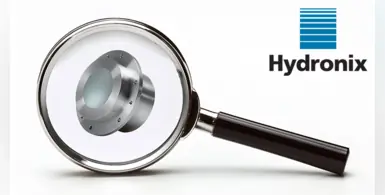
Meet the XT series from Hydronix 

The Hydronix XT series is designed to meet all of the criteria outlined above — in a single, field-proven platform built on unique digital microwave technology.

Explore the XT series

CISCE is going to transform China's position as a global leader in supply chain innovation.

The China-Spain Economic and Trade Forum and a roadshow for the third China International Supply Chain Expo (CISCE) were held in Madrid on June 10

The event attracted representatives from trade and investment promotion agencies, and companies from both countries.

Ren Hongbin, China Council for Promotion of International Trade (CCPIT) Chairman, stated that the visit to Spain aims to implement the vital consensus made by the leaders of both countries and further enhance their economic and trade relations. He emphasised that this initiative seeks to build a stronger and more dynamic comprehensive strategic partnership between China and Spain.

The Spanish business community has recognized China's role in fostering stability and cooperation in the global supply chain. Spanish companies articulated their eagerness to capitalise on their strengths in logistics, manufacturing, and energy. They also expressed their intention to participate in the upcoming CISCE actively.

During the forum, representatives from the China International Exhibition Center Group presented specific information about the third CISCE. They also signed cooperation agreements with Spanish institutions and businesses. The third CISCE is scheduled to take place from July 16-20, 2025, in Beijing. The event will highlight six key industrial chains: advanced manufacturing, clean energy, smart vehicles, digital technology, healthy living, and green agriculture. It will also feature a dedicated supply chain service area.

Ren Hongbin ended by reiterating the importance of this collaboration, stressing the need for both countries to work together to expand their economic ties and explore new opportunities in various sectors.
"Through this visit, we hope to implement the important consensus reached by our leaders and continue to strengthen the China-Spain relationship in trade and investment," Ren said.

The CISCE is going to play a vital role in empowering China's position as a global leader in supply chain innovation, fostering deeper international cooperation and creating new opportunities for companies worldwide.

Sudan, the Philippines and Malawi made notable contributions to the Svalbard Global Seed Vault. (Image source: Adobe Stock)

More than 14,000 seed samples from 21 genebanks were deposited in the Svalbard Global Seed Vault last month

These samples included essential varieties of sorghum and pearl millet from Sudan’s crop genebank; a collection of velvet beans from Malawi; and critical food crops from a Philippine gene bank that is being destroyed by typhoons and fires. Brazil, the host of this year’s global climate negotiations, also deposited a major collection of more than 3,000 varieties of rice, beans and maize.

Following the deposit ceremony, the first-ever Svalbard International Dialogue brought together high-level government officials, crop experts and global thought leaders to discuss the challenge of safeguarding crop diversity amid increasing environmental pressures and escalating global conflicts.

Sudan’s contribution 

Sudan made its sixth deposit of seed samples of 15 species, including many varieties of sorghum, a crop that is deeply tied to Sudanese cultural heritage, and is also a lifeline for food security in the country. With the help of the Emergency Reserve for Genebanks, hundreds of seed samples that were impacted during the civil war, were transported to NordGen to be sorted catalogued, packed and documented as part of the Sudanese deposit. These were then transported to the Svalbard Global Seed Vault. 

The Philippines’ contribution 

After several seed stocks were destroyed by natural extreme events like typhoons and fires, partners from the Philippines with support from the BOLD Project, visited Svalbard to deposit seeds of eggplant, rice bean, lima bean and sorghum.

Malawi’s contribution 

Being another BOLD partner, Malawi deposited velvet beans, a crop that enables farmers to boost production and keep their soils healthy, while also offering important medicinal benefits. Velvet beans are a nitrogen-fixing legume that when used as a fertiliser can more than double maize yields. The species, which is also used in traditional medicine, boasts high levels of levodopa, a compound used to treat the symptoms of Parkinson's disease. 

“This moment is a powerful reminder that securing our food future requires collective action,” said Stefan Schmitz, executive director of the Crop Trust. “Through our partnerships, including the BOLD project, we’ve worked with institutions around the world to safeguard vital crop diversity.”  He further highlighted how the deposited seeds represented not only biodiversity, but also the knowledge, culture and resilience of the communities that steward them. “We must find a way to protect this crop diversity for generations to come,” Schmitz added. 

The X-ray inspection system Dylight S combines a compact design with precise foreign body detection and efficient quality control. (Image source: Minebea Intec)

One of the world's leading industrial weighing and inspection technologies, Minebea Intec has introduced the new Dylight S, an X-ray inspection system that enables manufacturing companies to guarantee the highest product safety and quality at an affordable price 

The evolving needs of the food and pharmaceutical industries makes advanced technologies crucial to ensure sustainability, while maintaining high product quality, safety and affordability. Regulations such as the pre-packaging ordinance or supplier audits require complete documentation. At the same time, sustainable packaging materials make the use of advanced X-ray technologies essential. This is where the new X-ray inspection system Dylight S comes in. 

Featuring sideshooter technology, this compact system has been specially developed to ensure the quality of products in upright containers. It enables more precise detection of foreign bodies in products with light and complex packaging. The X-ray inspection system not only enables reliable detection of metallic and non-metallic foreign bodies—including glass, rubber, stones or plastic parts—in containers such as PET bottles, liquid food cartons or plastic cans, but also offers functions for completeness checks and fill level inspections. Thanks to a wide range of interfaces, Dylight S can be seamlessly integrated into digital production environments

"The X-ray inspection system Dylight S is characterised by its extremely compact design. This enables easy integration into existing production lines," said product manager at Minebea Intec, Mengqi Liang. "Another key advantage of the Dylight S is using the monoblock generator without an external transformer, which reduces technical complexity and simultaneously lowers the total cost of ownership (TCO)."

Furthermore, to boost production efficiency and improve accuracy, Minebea Intec is introducing another innovative feature with the X-ray inspection system Dylight S: autonomous parameter adjustment. This function optimises the product set-up process and inspection process by automatically adjusting the settings to reduce false rejects. Another notable feature is the image acquisition function that uses innovative software technology to generate a second X-ray image from an acquired image, enabling the operating personnel to subsequently optimise brightness, contrast and scaling and to detect the foreign bodies that have been missed in the original images. 


The latest innovation demonstrates the longstanding collaboration between Valio and Berry, and the strength of the partnership between the two businesses. (Image source: Berry)

Berry Global has launched a revolutionary packaging solution to help Finnish dairy pioneer Valio meet its commitment to significantly reduce plastic usage by 2026

Valio aims to cut down the usage of plastic in its single-use and single-serve packaging by 15%, as part of which its popular range of PROfeel protein puddings are being switched to a custom-designed version of Berry’sCombiLight pot. 

The CombiLight is a hybrid packaging solution made from a plastic skeleton and carton sleeve, which are melted together to create a strong structure. Valio had already switched its quark products to the CombiLight, but for the puddings the conversion required the development of a new coating with enhanced barrier properties to ensure optimal shelf life.

Working in collaboration with Stora Enso, a leader in barrier technology, the new barrier solution was achieved by Berry. In addition to reducing food waste, this extended shelf life will also provide better export opportunities for Valio.

The protein-rich PROfeel puddings will be available in various flavours including chocolate, caramel, and vanilla-meringue and will be launched by the company in the new packaging this December. Some notable features like enhanced print quality as well as a printable bottom surface for the display of important product information will allow a clean, polished look on the sides of the pot, in turn creating better branding opportunities for Valio.

“Working with Berry is a pleasure,” said Valio’s head of Packaging Development, Juhana Pilkama. “Their team is not only willing to try new things, but they are also highly reliable and open in their approach. We have regular meetings to align on projects and share ideas, and that has been crucial in developing the enhanced CombiLight pot. We could not be more satisfied with the result.”   

More Articles …