




Growers across the world are set to step into 2026 with a powerful new advantage: earlier and more accurate detection of four major moth pests, thanks to an upgraded PATS-C monitoring model.
From the start of the year, users of this cutting-edge system will gain faster insight into early pest pressure, enabling them to intervene long before caterpillar damage takes hold an increasingly vital capability as chemical control options become more restricted.
The newly enhanced model is the result of years of intensive data collection combined with invaluable on-the-ground feedback from growers. PATS has built this breakthrough on over half a million recorded insect flights and more than 12,000 minutes of visual reference data across eight key crops, including tomato, bell pepper and gerbera. Each report of a false positive helps refine the system further, and with hundreds of companies worldwide contributing standardised data, the accuracy continues to strengthen for the entire industry.
At the core of the upgrade is the ability of PATS-C to capture the unique flight paths of each moth, generating precise biometrics that allow the model to differentiate between pest species with remarkable accuracy. The update specifically supports early identification of four of the most economically damaging pests: Tomato looper moth (Chrysodeixis chalcites), Tomato leafminer (Tuta absoluta), European pepper moth (Duponchelia fovealis) and Banana moth (Opogona sacchari). These pests threaten vegetables, fruit crops and ornamentals globally making accurate detection essential for preventing damaging outbreaks.
With PATS-C already deployed in more than twenty countries, this update marks a major step forward for global crop protection and greenhouse pest management. The timing could not be more significant: from 1 January 2026, growers will face tighter restrictions on crop protection products, reducing the availability and flexibility of chemical solutions. In this landscape, early detection and real-time monitoring become critical tools for maintaining healthy crops.
The new model also strengthens predictive capabilities. Integrated with PATS-Vinder, the system can forecast the appearance of the first caterpillars up to seven days before hatching. This allows growers to plan labour, biological controls and interventions with pinpoint accuracy something traditional pheromone traps simply cannot achieve. Many early pest generations slip through unnoticed using older tools, often leading to severe outbreaks later in the season.
PATS’ data-driven approach is also helping reveal regional and national pest patterns. As Bram Tijmons from PATS said,"A significant moment occurred on the first real hot night of 2025, when large numbers of Tomato loopers entered nearly all monitored greenhouses across the Netherlands, Belgium and Germany. This enabled us to send highly targeted warnings to vegetable growers. The response was remarkable: both users and non-users immediately recognised the first signs of increased pressure and were able to act accordingly."
New PATS-C users will begin with the upgraded system immediately, while existing users will transition gradually, with all installations updated by early January. With stronger forecasting, real-time insights, and earlier alerts, growers now have a powerful, sustainable tool to stay one step ahead of moth pests throughout 2026 and beyond.
Smarter moth pest detection: PATS-C helps growers stay ahead in 2026
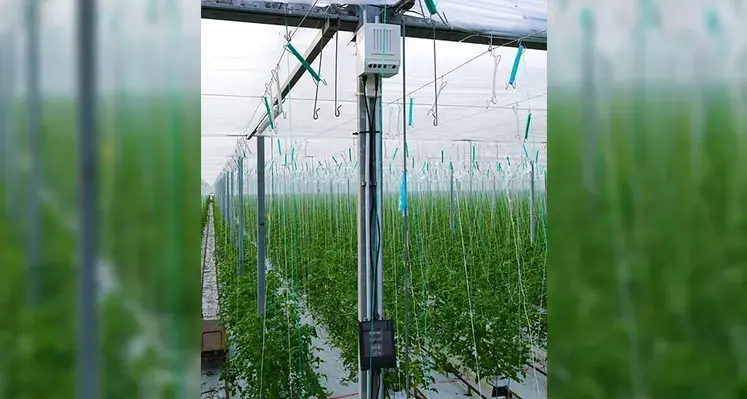
PATS’ data-driven approach is also helping reveal regional and national pest patterns. (Image credit: PATS)