




India’s agricultural sector had been undergoing significant modernisation, with technological advancements reshaping the way farming operated.
However, the growing demand for highly skilled professionals exposed a training gap that threatened to limit the benefits of this transformation.
The third day of EIMA Agrimach, an exhibition showcasing machinery and agricultural technologies for India and Southeast Asia, focused on professional skills and training. The conference, titled “Skilling Rural Youth and Farmers for a Mechanized and Digital Agriculture Future”, addressed the urgent need to equip the workforce with the expertise required for mechanized and digital farming. The event was organised by the Italian Federation of Agricultural Machinery Manufacturers (FederUnacoma) and the Federation of Indian Chambers of Commerce and Industry (FICCI) in New Delhi.
Moderated by Ruchira Saini, Head of Advocacy and Government Relations for India and South Asia at Corteva Agriscience, the panel included notable speakers such as V.N. Kale, Additional Commissioner for Machinery and Technologies at the Department of Agriculture and Farmers’ Welfare; D.K. Singh, Senior Researcher at the AgriPV Centre of Excellence; Mukesh Jain, Director of the Northern Region Farm Machinery Training & Testing Institute (NR-FMTI); Satender Singh Arya, CEO of the Agriculture Skill Council of India (ASCI); Varun Yadav, Manager at the Syngenta Foundation for Sustainable Agriculture; and Shruti Aggarwal, Senior Manager at YARA International.
Mechanisation and digitalisation had emerged as the key drivers of agricultural transformation, with drones, AI-based tools, and digital platforms becoming increasingly integral. Yet, speakers emphasised that the workforce, largely rural, still struggled to adopt these technologies effectively. Training gaps persisted even among younger generations, who, despite being more open to innovation, often lacked access to structured skill development programmes.
The conference concluded that bridging this gap was critical not only to boost productivity but also to improve livelihoods in rural areas and support inclusive growth. Experts highlighted the importance of innovative training models developed through collaborations between industry, universities, and institutions, alongside a clear roadmap to enable farmers to participate more actively in India’s agricultural modernisation.
By addressing these challenges, EIMA Agrimach underscored how professional training could empower India’s rural workforce, ensuring that mechanisation and digitalisation truly translated into a more productive and sustainable agricultural sector.
EIMA Agrimach highlighted training needs for modern Indian agriculture
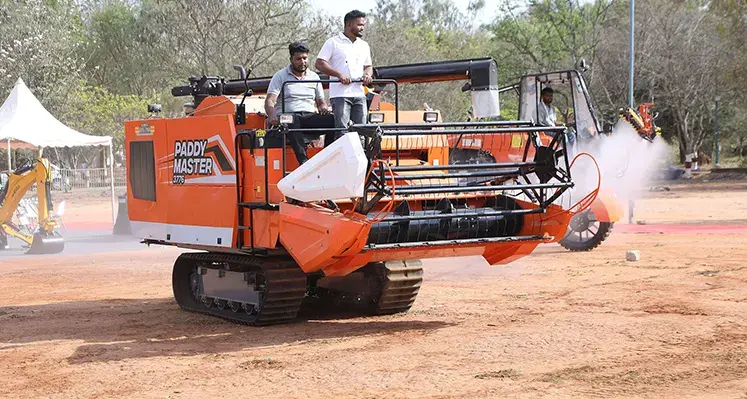
EIMA Agrimach underscored how professional training could empower India’s rural workforce.(Image credit: Eimaagrimach)