




Highly pathogenic avian influenza (HPAI) continues to spread across East and West Asia, with new outbreaks affecting poultry farms in countries including the Philippines, Japan, South Korea, Taiwan, Iraq and Israel.
The resurgence of the H5 group of avian flu viruses is raising concerns over poultry health, food security and regional egg supplies.
Among Asian nations, the Philippines has reported the highest number of new poultry outbreaks in recent days. Over the past 10 days, the country’s animal health authorities confirmed 10 outbreaks of HPAI to the World Organisation for Animal Health (WOAH). Most involved the H5N1 virus, particularly in Isabela province in northern Luzon, affecting both large commercial farms and smaller backyard flocks. These latest cases bring the total number of outbreaks on Luzon over the past four years to 293, impacting around 2.35 million birds through culling or mortality.
New detections have also been reported in Mindanao, including South Cotabato, Davao del Sur and North Cotabato, involving grazing ducks infected with H5N1 and H5N8 strains. Authorities cite contact with infected birds and contaminated fomites as the likely sources of infection. As of 31 December, only one active outbreak remains under investigation in Central Luzon.
In Japan, five additional H5N1 outbreaks were confirmed between late December and early January, mainly affecting large laying hen farms. These cases raise the country’s total outbreaks since October to 13, with more than 3.87 million poultry directly affected. Further suspected cases are currently under review.
The spread of avian flu has significantly disrupted South Korea’s egg supply, prompting the government to import over 2.2 million eggs from the United States in January. Since October, South Korea has confirmed 34 poultry outbreaks, including a notable case involving the H5N9 virus, detected for the first time in domestic birds.
Elsewhere in East Asia, Taiwan reported a new H5N1 outbreak in early January, affecting nearly 60,000 laying hens in Chiayi county. In western Asia, H5N1 has re-emerged in Israel and Iraq, with infections linked to contact with wild birds.
With outbreaks spanning multiple regions and virus strains, authorities warn that enhanced biosecurity, surveillance and rapid response will be critical to limiting further spread across Asia’s poultry sector.
Avian flu resurfacing in Asia's poultry flocks
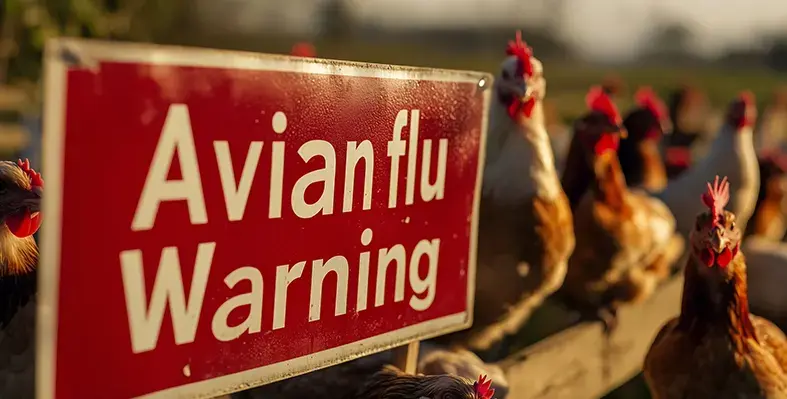
Avian flu viruses is raising concerns over poultry health, food security and regional egg supplies.