Arsenic contamination in the Kok and Sai rivers in northern Thailand is threatening the quality of water used for agriculture, prompting the government to turn to a research-led solution
The Ministry of Higher Education, Science, Research and Innovation (MHESI) has proposed an 18-month pilot of a smart sediment-trapping system in Mae Sai district, Chiang Rai province, to capture fine particles carrying arsenic before they enter irrigation supplies.
The research brings together Thailand Science Research and Innovation (TSRI), Naresuan University and Danish water consultancy DHI. Ahead of the pilot, the Royal Irrigation Department and TSRI are preparing to survey potential installation sites, including the Mae Sai irrigation headworks in Chiang Rai province. Scheduled to run for 18 months, the trial will test the technology under actual river conditions, with the 2027 rainy season expected to provide an important measure of its ability to keep arsenic-laden sediment out of agricultural water supplies.
How the smart sediment trap will remove arsenic
Much of the arsenic moving through the river system is carried by fine suspended sediment. Conventional weirs are not designed to capture these smaller particles effectively, allowing them to travel downstream with the water.
The proposed system uses sensors, artificial intelligence and automated controls to monitor turbidity and divert water into treatment ponds when suspended sediment levels exceed a set threshold. Its treatment process involves several stages:
Water diversion: Sensors detect high turbidity and trigger the diversion of affected water into holding ponds.
Sediment separation: Coagulants are added when needed to help fine particles settle.
Sediment removal: The accumulated material is extracted, dewatered, weighed and labelled for traceability before safe disposal.
Water testing: Arsenic levels are checked before treated water is returned to the river.
Monitoring: Water-quality data are made available to authorities and the public.
Researchers assessed the system using a digital twin simulation based on 523 days of local river data. The model indicated that three units installed along a section of the Sai River between kilometres 95 and 99 could reduce arsenic levels by up to 94.6%. Water was projected to meet the required quality standards on 476 of the 523 days modelled.
The figures are projections rather than results from a completed field trial. Testing under actual river conditions will determine whether the system can achieve comparable reductions, particularly as rainfall changes water flow and sediment concentrations.
Protecting irrigation supplies and agricultural land
Government estimates suggest the proposed installation could reduce arsenic entering rice-growing areas by approximately 94%, protecting around 27,000 rai (4,320 hectares) of farmland and benefiting more than 3,356 water users.
The pilot is one part of a broader effort to establish where agricultural production may be affected. Thai authorities are also assessing soil, irrigation water and crops, with inspections extending to aquaculture and livestock in areas considered at risk.
A proposed agricultural risk map, using Thailand's Agri-Map system, will classify production areas into three zones:
Green: Areas where farming can continue in compliance with applicable safety standards.
Yellow: Areas requiring closer monitoring and further assessment.
Red: Areas where restrictions or alternative water supplies may be necessary.
The latest reported assessment found that none of 140 rice samples exceeded the standard for inorganic arsenic. However, the results do not establish the safety of every crop or farming area across the river basins. Further testing is needed to identify locations that require intervention and to avoid treating all agricultural production in the region as equally affected.
Identifying the contamination source
The source of arsenic contamination has not yet been conclusively established. Mining activity is among the possibilities being investigated, alongside natural geological sources. Since the Kok River flows from Myanmar's Shan State into Chiang Rai and the Sai River runs along part of the Thailand–Myanmar border, cross-border monitoring is also necessary.
On 25 November, Thailand and Myanmar agreed to establish six water-quality monitoring stations: four along the Kok River and two along the Sai River. The countries will exchange monitoring data at least twice a year.
For the research partners and irrigation authorities, the next test is whether the sediment trap can deliver the reductions indicated by the simulation. Its field performance, together with continued testing of irrigation water, soil and crops, will help determine how far the approach can protect rice production in northern Thailand.
Thailand to test smart weir against arsenic in irrigation water
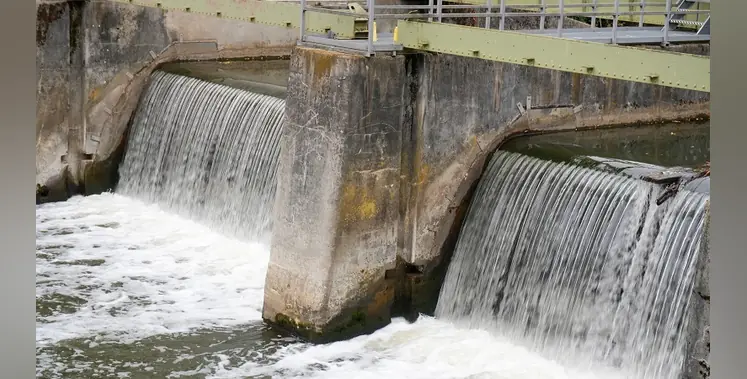
MHESI has proposed an 18-month pilot of a smart sediment-trapping system in Mae Sai district, Chiang Rai province.