

cc.web.local

twitter Linkedin acp Contact Us

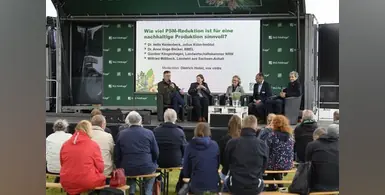
The future of crop production at DLG Feldtage 2026. (Image credit: DLG)

From 16 to 18 June 2026, Bernburg in Saxony-Anhalt will once again become the central hub for modern crop production as the DLG Feldtage returns to the fields of the International DLG Crop Production Centre.

Set on DLG’s expansive 600-hectare trial farm near Leipzig, the open-air event is gearing up to showcase practical farming innovations under the inspiring theme “Crop Production out of the Box”. With more than 150 exhibitors already registered, the organisers are still welcoming further participants via dlg-feldtage.de.

Recognised as the leading international field exhibition for crop professionals, DLG Feldtage brings together farmers, agronomists, machinery experts and researchers seeking hands-on insights into the future of crop production. This year’s programme spans everything from plant breeding and crop protection to fertilisation strategies and cutting-edge agricultural machinery. Visitors can look forward to a rich mix of demonstrations, expert knowledge and real-world trial plots, supported by popular formats including DLG Spotlights, Expert Stages and Pop-up Talks.

The thematic DLG Spotlights are set to be a major draw. The “Planting Green” Spotlight will delve into direct drilling into living cover crops, with live plots demonstrating soil-friendly techniques, nutrient efficiency and modern weed management approaches. Equally compelling is the “Value Chain for Quality Wheat” Spotlight, which traces how premium wheat quality is upheld from field to processing, illustrating the collaboration required across agriculture, trade and milling. Meanwhile, the “Organic Farming” Spotlight will highlight diverse rotations, robust crop choices and practical advice for organic growers looking to refine both production and marketing.

Across the site, visitors will find dedicated meeting zones for discussions on oil and protein crops, resilient cropping concepts and strategies for navigating weather-related risks. As always, machinery demonstrations are a core attraction. Across six themed areas from direct seeding and deep tillage to mechanical weed control 66 machine combinations will take to the field, each accompanied by expert commentary and presented once per day.

Following its successful debut in 2024, FarmRobotix returns with the latest robotics, automation tools and AI-driven innovations for crop production. A special demonstration area will spotlight autonomous field systems, offering a glimpse of how technology may redefine farming in the years ahead.

Beyond the plots and machines, the DLG Plaza will serve as the social and professional heart of the event, hosting expert talks, panel sessions, regional food and relaxed networking. Short and sharp Pop-up Talks will take place at exhibitor stands and Spotlight areas, covering timely topics such as fertilisation and crop protection. The popular DLG CropNight will also make its return, inviting attendees to unwind with live music, food and summer drinks. Camping facilities will be available for visitors wishing to stay on site.

For more information please visit www.dlg-feldtage.de

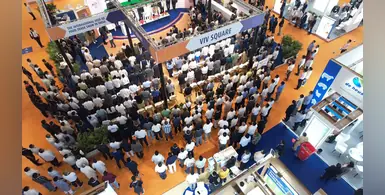
EIMA Agrimach underscored how professional training could empower India’s rural workforce.(Image credit: Eimaagrimach)

India’s agricultural sector had been undergoing significant modernisation, with technological advancements reshaping the way farming operated.

However, the growing demand for highly skilled professionals exposed a training gap that threatened to limit the benefits of this transformation.

The third day of EIMA Agrimach, an exhibition showcasing machinery and agricultural technologies for India and Southeast Asia, focused on professional skills and training. The conference, titled “Skilling Rural Youth and Farmers for a Mechanized and Digital Agriculture Future”, addressed the urgent need to equip the workforce with the expertise required for mechanized and digital farming. The event was organised by the Italian Federation of Agricultural Machinery Manufacturers (FederUnacoma) and the Federation of Indian Chambers of Commerce and Industry (FICCI) in New Delhi.

Moderated by Ruchira Saini, Head of Advocacy and Government Relations for India and South Asia at Corteva Agriscience, the panel included notable speakers such as V.N. Kale, Additional Commissioner for Machinery and Technologies at the Department of Agriculture and Farmers’ Welfare; D.K. Singh, Senior Researcher at the AgriPV Centre of Excellence; Mukesh Jain, Director of the Northern Region Farm Machinery Training & Testing Institute (NR-FMTI); Satender Singh Arya, CEO of the Agriculture Skill Council of India (ASCI); Varun Yadav, Manager at the Syngenta Foundation for Sustainable Agriculture; and Shruti Aggarwal, Senior Manager at YARA International.

Mechanisation and digitalisation had emerged as the key drivers of agricultural transformation, with drones, AI-based tools, and digital platforms becoming increasingly integral. Yet, speakers emphasised that the workforce, largely rural, still struggled to adopt these technologies effectively. Training gaps persisted even among younger generations, who, despite being more open to innovation, often lacked access to structured skill development programmes.

The conference concluded that bridging this gap was critical not only to boost productivity but also to improve livelihoods in rural areas and support inclusive growth. Experts highlighted the importance of innovative training models developed through collaborations between industry, universities, and institutions, alongside a clear roadmap to enable farmers to participate more actively in India’s agricultural modernisation.

By addressing these challenges, EIMA Agrimach underscored how professional training could empower India’s rural workforce, ensuring that mechanisation and digitalisation truly translated into a more productive and sustainable agricultural sector.

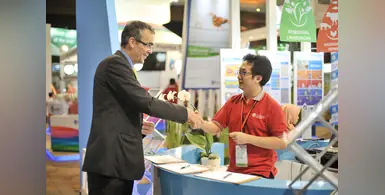
Join the agricultural revolution at EIMA Agrimach. (Image credit: EIMA Agrimarch)

The ninth edition of EIMA Agrimach India 2025 has opened in New Delhi, presenting the latest in agricultural machinery and technology.

The event, which is being held from November 27 to 29, serves as a significant international exhibition targeting India and Southeast Asia’s rapidly growing agricultural sector. Innovation is at the forefront of the event, with the opening conference highlighting the increasing importance of mechanisation in India’s agricultural transformation.

The inauguration ceremony took place this morning at the IARI PUSA University Campus. During the ceremony, representatives from institutions and organising bodies emphasised the importance of agriculture in the Indian economy. TR Kesavan, Chairman of the FICCI-EIMA Agrimach India Organising Committee and Board Member of TAFE, opened the discussions by highlighting the strategic role of India-Italy partnerships in advancing agricultural mechanisation. "The collaboration between Italy and India is crucial for the development of advanced agricultural technologies that can drive the sector forward," he said.

Simona Rapastella, Director General of FederUnacoma, the Italian Federation of Agricultural Machinery Manufacturers, also spoke on the growing importance of bilateral cooperation. "Emerging institutional relations between Italy and India have gained momentum, strengthening the foundation for further collaboration," she noted, emphasising that India is a key player in Italy’s trade strategy and included in the Italian Export Action Plan for non-EU markets.

India’s agricultural economy has undergone rapid transformation, primarily driven by mechanisation, which has elevated farming operations and enhanced productivity. Shashi Kant Singh, Partner at PwC India, pointed out that while the sector has made significant strides, it still holds vast growth potential, with mechanisation and next-generation technologies playing a crucial role in realising that potential.

The Italian Trade Agency (ICE) has been instrumental in supporting this collaboration. Sabrina Mangialavori, Deputy Director of ICE New Delhi, explained that the Agency provides various services, including promotional activities and international market expertise, to help Italian SMEs establish strong commercial ties with Indian farmers and agri-businesses. "EIMA Agrimach serves as a strategic platform for strengthening India-Italy relations," she said.

The India-Italy collaboration extends beyond technological exchange to include government-backed incentives that encourage mechanisation in the agricultural sector. Devesh Chaturvedi, Secretary of the Department of Agriculture and Farmers' Welfare, outlined the Indian government’s efforts to support mechanisation and introduce next-generation machinery. He also emphasised the need for greater access to mechanical equipment for small farmers, who represent a significant portion of India’s agricultural workforce.

A key challenge, according to Chaturvedi, is improving after-sales service and expanding access to technology for women in agriculture. This would ensure more inclusive growth within the sector. Francesco Lollobrigida, Italian Minister of Agriculture, shared a video message where he highlighted that "Made in Italy" agricultural machinery is known for its quality, reliability, and sustainability. "These qualities are well suited to meet the technological needs of Indian agriculture," he stated.

The opening session concluded with Subroto Geed, Co-Chairman of FICCI’s National Agriculture Committee and President for South Asia at Corteva Agriscience, reinforcing the potential of India’s growing agricultural economy. Geed noted that increasing global demand for food, driven by population growth, presents a tremendous opportunity for India’s agricultural sector. "This potential can only be realised with committed engagement across the entire agricultural value chain," he concluded.

EIMA Agrimach India 2025 is proving to be an essential platform for showcasing innovation and fostering stronger cooperation between India and Italy, positioning both nations to address the challenges and opportunities of modern agriculture.


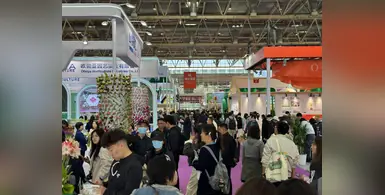
EIMA International has established itself as one of the world’s most influential exhibitions for agricultural and gardening machinery.(Image credit: EIMA)

EIMA International has established itself as one of the world’s most influential exhibitions for agricultural and gardening machinery.

Held every two years in Bologna, Italy, the event is organised by FederUnacoma, the Italian Agricultural Machinery Manufacturers Federation, alongside BolognaFiere. Since its launch in 1969, EIMA has grown into a major platform for manufacturers, industry experts, and buyers seeking the latest advancements in agro-mechanical technology.

The exhibition draws a diverse international audience, with companies from across the globe presenting cutting-edge machines and equipment. Delegates from more than 80 countries attend each edition, underscoring the event’s global reach and economic relevance. Hosted across an impressive 375,000 m², including 122,000 m² of dedicated exhibition space, EIMA offers visitors unmatched access to innovations that are shaping the future of farming.

EIMA International is organised into 14 distinct merchandise sectors, covering every aspect of modern agriculture. These range from engines, irrigation systems, soil-working and sowing equipment to harvesting machinery, crop protection technologies, components, and transport solutions. The structure of the fair allows visitors to explore the full agricultural supply chain in one location.

Alongside the main sectors, EIMA features several highly specialised themed showcases that highlight emerging trends. EIMA Components focuses on essential parts and accessories, while EIMA Green offers a hub for garden machinery and green-space maintenance tools. EIMA Energy is dedicated to renewable power for agriculture and forestry, and EIMA Idrotech spotlights advanced irrigation and water-management systems. One of the most forward-looking areas is EIMA Digital, where exhibitors present precision-farming technologies, electronics, and digital systems designed to boost efficiency and sustainability.

To enhance the visitor experience, the event is divided into two phases. The opening days are set aside exclusively for business professionals, enabling targeted networking and commercial negotiations. The remaining days welcome a wider audience, including gardening enthusiasts and small-scale growers.

In recent years, EIMA has hosted around 1,750 exhibitors from approximately 50 countries, displaying more than 60,000 models of machinery and equipment. Its scale and reputation firmly position it as a leading global event for agricultural machinery, landscaping technologies, and green innovation.

The event aims to strengthen agrifood investment and drive solutions to the region’s most pressing food and farming challenges.(Image credit: Further Food & Ag Investment Summit)

Singapore is set to host the Further Food & Ag Investment Summit on 3 November 2025 at the Guoco Midtown Network Hub, bringing together agricultural innovators, investors, and corporate leaders from across the Asia-Pacific region

The event aims to strengthen agrifood investment and drive solutions to the region’s most pressing food and farming challenges.

Held in partnership with AgFunder, a global leader in agrifoodtech venture investing, the summit acts as the opening event for Singapore International Agri Week (4–6 November). The organisers describe it as a “deal-driven platform” designed to accelerate partnerships, attract capital, and advance sustainable innovations that support the future of agriculture in the region.

Unlike traditional conferences, the Further Summit is structured to deliver measurable results by facilitating one-to-one investor meetings, networking opportunities, and interactive sessions.

Asia-Pacific currently produces over half of the world’s food, yet attracts only a quarter of global agrifood investment. The summit aims to bridge this funding gap and support the growth of climate-smart, tech-enabled, and commercially viable farming systems.

Key focus areas for 2025 include:

AI and Digitalisation – Using data, automation, and robotics to boost productivity and resilience in food production.

Regenerative Agriculture and Nature-Based Solutions – Encouraging soil restoration, sustainable aquaculture, and eco-friendly farming.

Novel Ingredients and Bio-Innovations – Scaling up new protein sources and bio-based ingredients to feed Asia sustainably.

Jennifer Yuen, Co-founder of Further, said, “Across Asia, a wave of dynamic entrepreneurs are driving bold solutions for food and climate. The Further Summit is built for them – we’re passionate about building a community where founders can connect directly with investors and partners to turn ambition into traction, driving real change in how we feed and sustain the planet.”

John Friedman, Asia Director of AgFunder, added, “Transforming our food system requires both capital and collaboration, none more so than in Asia-Pacific. That’s why AgFunder has partnered with the Further Summit to spotlight leading innovators and work with investors to build a stronger capital stack for the region and sector as a whole.”

More Articles …