vc.web.local

Vietnam's Lai Chau province has recorded 45 African swine fever outbreaks across 37 communes and wards, affecting 2,539 pig-farming households.

African swine fever (ASF) has been reported in 37 communes and wards in Vietnam's northern Lai Chau province, with 45 outbreaks recorded between the beginning of 2026 and 14 November

The outbreaks affected 9,804 pigs, including those that fell ill, died or were culled, across 2,539 farming households in 275 villages and residential areas. Provincial authorities presented the figures at a conference on animal disease prevention and control convened by the provincial People's Committee on 16 November. 

Although the number of pigs culled was 34% lower than during the same period in 2025, outbreaks across the province continue to pose challenges for local livestock producers and veterinary services. Twenty-four outbreak sites had gone more than 21 days without a pig needing to be culled, while other affected localities were reporting isolated cases.

Farm biosecurity remains a concern

Lai Chau authorities identified the structure of local livestock production as a challenge in containing animal diseases. Small-scale and dispersed farming remains widespread, while housing conditions and the application of biosecurity measures are inadequate at some farms.

Weak controls on animal transport, slaughter and sales in certain areas have also complicated disease prevention efforts. Officials noted that sanitation and disinfection were not consistently performed, creating additional risks for livestock holdings.

The province has used 22,693 litres of disinfectant chemicals and 52,676 kg of powdered lime for cleaning and disinfection. Veterinary and local authorities have also been monitoring outbreaks, identifying affected areas and overseeing the disposal of infected animals.

Authorities tighten surveillance and movement controls

The provincial Department of Agriculture and Environment has proposed stronger disease surveillance and faster action at the local level, alongside tighter checks on the movement, sale and slaughter of animals. The department also called for stronger veterinary services and continued vaccination, sanitation and disinfection measures as part of wider animal disease prevention.

Lai Chau has also been carrying out animal health checks on livestock and poultry entering and leaving the province. A total of 234,235 animals were inspected across 266 incoming consignments, while 17,929 animals were checked across 61 outgoing consignments.

Provincial leaders have instructed commune and ward authorities to maintain accurate livestock inventories and monitor herds down to individual villages and farming households. Farmers have been urged to report suspected cases promptly, avoid selling pigs showing signs of disease and refrain from disposing of dead animals in the environment. Authorities are also expected to strengthen checks at transport junctions and in high-risk communes.

Restocking subject to disease controls

The provincial government has called for infected and suspected animals to be culled in line with veterinary requirements, while unaffected areas are expected to maintain preventive measures. Local officials have also been asked to assess farm conditions and ensure disease-control requirements are met before allowing restocking.

Lai Chau is encouraging a gradual shift from household-based pig production towards more concentrated farming systems. The move is intended to improve farm management and make it easier to apply consistent biosecurity measures.

The province's response will depend on early detection, effective containment and compliance with disease-control measures at farm level. Ensuring farms meet the necessary health and biosecurity requirements before restocking will also help limit the risk of further ASF outbreaks.
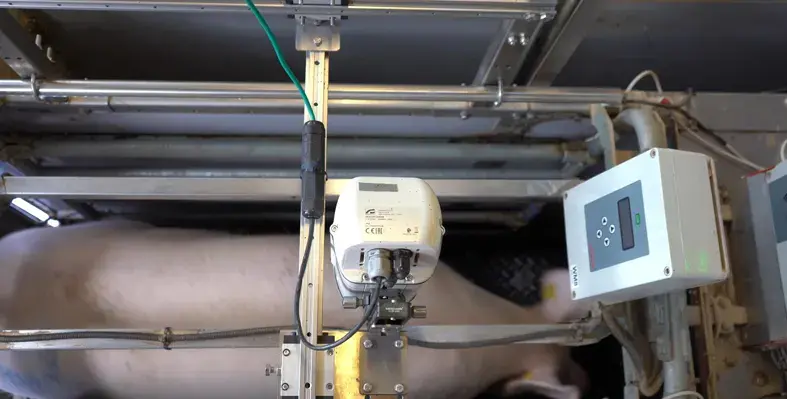
Body AI Score is a camera-based system. (Image source: SCHAUER Agrotronic)

SCHAUER Agrotronic GmbH has launched Body AI Score that ensures automated condition assessment and condition-adapted feeding 

Body AI Score is a camera-based system that can be used in the feeding station, selection station or as a stand-alone device during stabling. The animal is recorded by camera from several positions, analysed and the condition of the animal determined. The artificial intelligence (AI) supported analysis of the animal is based on a specially created standard, which has been developed and calculated through countless practical measurements. It can be installed in the feeding station itself or in CID Selection. This enables continuous measurement of the condition curve and early adjustments to the feed curve. However, it is also possible to equip a separate stand-alone station, which is positioned in the raceway, with which all animals are assessed before being driven into the holding pen.

Until now, the condition of the animal could only be evaluated by measuring the thickness of the back fat. This is extremely time-consuming and difficult to reproduce, as this measurement has to be carried out at specific, precisely measured points. Automation is not possible due to the high individuality of the animals. Another approach is to record the animal's weight. However, this method only allows limited conclusions to be drawn about the condition of the animal, as the animals can be of different lengths and heights and therefore their weight is of little significance.

Furthermore, the weight also fluctuates greatly depending on whether the sow has just consumed water or feed, defecated or urinated. This leaves only the trained eye of the operator. External staff are often not qualified to correctly assess the animals. With Body AI Score, it is possibl to automate the condition assessment and assignment of the correct feed curve, thereby optimising performance and costs.

It is not sufficient to assess the condition of pregnant sows based solely on weight. This requires a correct assessment either by the trained eye of the barn staff or, for example, by measuring backfat thickness, However, this method often produces inconsistent results. The barn staff judge the animals according to criteria such as ‘not too lean’ or ‘not too fat’. The amount of feed required depends on the condition of the sows. This is significantly influenced by the sow's condition. However, as the barn staff often change on larger farms, the sows are often fed the same amount.

If the animals are not fed properly, they become fat, waste feed or are too thin. Automatic control helps to avoid this. The animals are fed in the way that is best for them. This saves money and makes the animals more fertile. 


The Alltech U.S. Pork Team has introduced Levelset, an innovative solution designed to reinforce gut health in pigs. (Image source: Alltech)

Levelset, an innovative solution manufactured by Ridley Feed Ingredients was designed to reinforce pig gut health and has recently been introduced by the Alltech US Pork Team at the World Pork Expo, which took place from 5-6 June at the Iowa State Fairgrounds in Des Moines, Iowa 

Levelset’s blend of key technologies synergistically supports natural resistance against diarrhea challenges while enhancing overall enteric health. The product is designed for maximum impact during three different life stages of production namely, pre-farrow sows, suckling pigs and weaned pigs, thus making it an exceptional tool in any production strategy.

“Across the industry, pathogen resistance is an ever-growing challenge, and solutions to reduce reliance on conventional antibiotics are of critical importance,” said Andy Rash, general manager of Alltech’s US swine business. “Levelset is an innovative blend of carefully developed technologies that minimises undesirable organisms within the gut, thus promoting the overall health and productivity of pigs.”

Both projects aim to develop cost-effective, safe, non-invasive health solutions that can be conveniently included in the pig's feed. (Image source: Renaissance Bioscience)

Leading Canada-based bioengineering company, Renaissance BioScience (RBSC) recently announced its strategic partnership with the University of Saskatchewan’s Vaccine and Infectious Disease Organisation (VIDO) to target two viral diseases, as well as the immune system function in pigs and piglets, using RBSC's revolutionary yeast-based technology

Anitoas turn-key swine flu test delivers breakthrough workflow simplicity and consistent, accurate results at the point-of-care. (Image source: Adobe Stock)

Biotechnology company Anitoa Systems LLC, recently announced the worldwide availability of its turn-key swine flu test for livestock

More Articles …