




vc.web.local

twitter Linkedin acp Contact Us

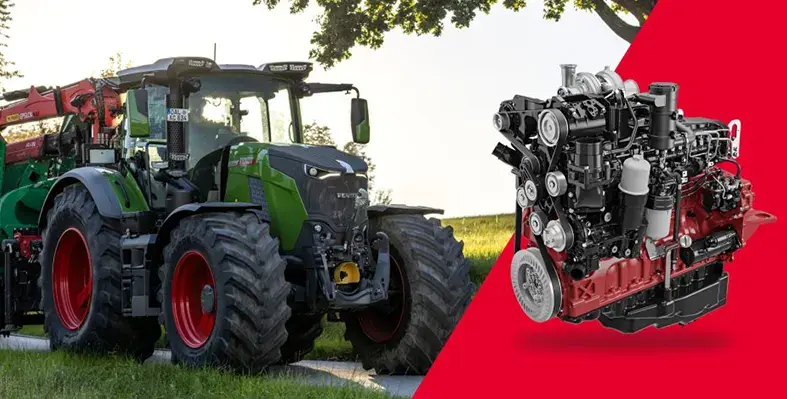
AGCO’s remanufactured engine programme provides a cost-effective way. (Image credit: AGCO Power)

AGCO Power has revealed a bold new vision for the future of agricultural and forestry machinery, showcasing a range of powertrain innovations that combine advanced diesel technology with low-carbon, sustainable solutions

The goal is clear to help farmers meet modern agricultural challenges while preparing for a cleaner, more efficient future.

At the centre of this innovation is the new CORE80 diesel engine, an 8-litre powerhouse delivering 252 kW of power and 1680 Nm of torque. This engine powers the 5th-generation Fendt 800 Vario, representing the next step in efficient and high-performance farming machinery. AGCO Power’s entire CORE engine series including the CORE50 and CORE75 — has earned top marks for efficiency in DLG’s PowerMix Test 2.0, proving their value in real-world farming conditions.

Complementing the diesel line-up is AGCO Power’s Future Battery Concept, which made its world debut at Agritechnica. The 150 kWh battery, based on NMC cell chemistry, is designed in-house and offers huge potential for electric farming equipment. “Battery technology currently appears promising for agricultural applications,” notes Director Engineering,  Kari Aaltonen, who estimates commercial production in five to seven years. Electric powertrains offer reduced operating costs and simpler maintenance, making them ideal for next-generation farm machinery.

In partnership with Valtra, AGCO Power also introduced its CO₂ Calculator concept, a pioneering tool that measures the type of fuel used and calculates a machine’s carbon footprint in real time. “Reliable data on the operational carbon footprint is a major competitive advantage for farmers,” says Jarno Ratia, Director of Product Management. The technology enables farmers to monitor emissions and improve sustainability reporting, helping them align with EU Green Deal standards.

Finally, AGCO’s remanufactured engine programme provides a cost-effective way to extend machinery life while reducing environmental impact. “Remanufacturing can lower total cost of ownership and reduce the carbon footprint versus a new machine,” explains Jussi Rinne, Director, Quality and Aftermarket. By reusing up to 80% of engine components, AGCO supports both farmer profitability and environmental responsibility.
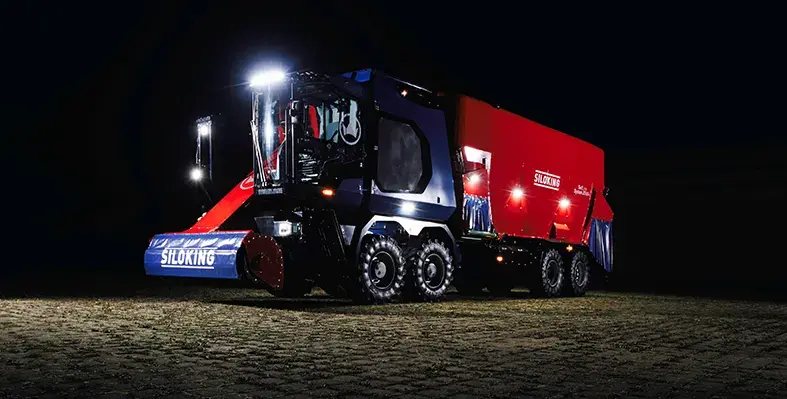
ILOKING continues to lead the way in agricultural innovation, developing feeding solutions that help farmers work smarter and boost productivity. (Image credit: SILOKING)

SILOKING has unveiled a true breakthrough in modern feeding technology with the new SelfLine 4.0 System 2000+ - the world’s most powerful self-propelled feed mixer, delivering an extraordinary 45 m³ mixing capacity and 510 horsepower

This innovative machine represents a major milestone for large-scale dairy and beef farms, setting a new global standard for power, precision, and performance in agricultural feeding systems.

The SelfLine 4.0 System 2000+ has been purpose-built for farms managing around 2,000 cows and young stock or for large feedlots demanding maximum efficiency and productivity. Capable of feeding up to 320 cows in a single mix, this next-generation machine saves valuable time while improving consistency and feed quality. Farmers benefit from fewer feeding cycles, reduced operational costs, and better overall herd nutrition management.

Under its robust design lies a 510 hp engine supported by a heavy-duty four-axle chassis that provides exceptional strength, stability, and traction in even the toughest working environments. With all four axles steerable and three driven, the SelfLine 4.0 System 2000+ ensures excellent manoeuvrability both inside the barn and out in the yard. Designed for long-term reliability, the machine is built for a service life of up to 20,000 operating hours, highlighting SILOKING’s dedication to durability and cost-effectiveness.

“With the SelfLine 4.0 System 2000+, we are presenting a machine that sets new standards. It features state-of-the-art technology that has never been installed in any self-propelled feed mixer before. The focus is clearly on saving time and improving precision to meet the growing demand of large-scale farms worldwide. More power, more capacity – to make feeding on large farms economically viable,” explains Sascha Behrend, Sales Director at SILOKING.

SILOKING continues to lead the way in agricultural innovation, developing feeding solutions that help farmers work smarter, boost productivity, and achieve greater sustainability across modern livestock farming operations.


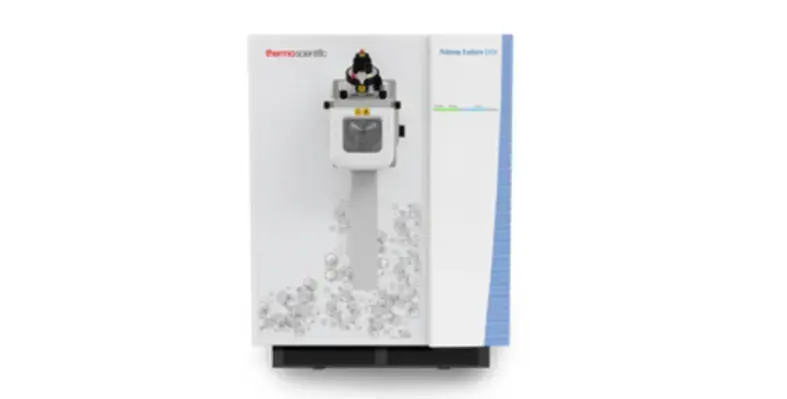
The Orbitrap Exploris EFOX is designed to deliver rapid, reliable results for laboratories that must meet strict safety standards.(Image credit: ThermoFisher Scientific)

Thermo Fisher Scientific, a global leader in scientific innovation, has introduced the Thermo Scientific Orbitrap Exploris EFOX Mass Detector — the world’s first high-resolution accurate mass (HRAM) Orbitrap system created specifically for environmental and food safety testing

This breakthrough marks a major step forward in protecting public health and agricultural sustainability, particularly in monitoring contaminants such as PFAS, pesticides, and other harmful residues in food and water.

The Orbitrap Exploris EFOX (Environmental and Food Organic Xenobiotics) is designed to deliver rapid, reliable results for laboratories that must meet strict safety standards. Traditional high-resolution systems are often adapted from research platforms, but this model is purpose-built for routine testing. It provides the same research-grade precision found in deep protein and small molecule analysis while being simple enough for everyday use. With minimal setup, laboratories can move from sample to result within minutes, maintaining both data quality and high throughput.

“As environmental and food safety laboratories face mounting pressure to deliver faster, more accurate results under tight budgets and stringent regulatory requirements, the Orbitrap Exploris EFOX significantly lightens the workload for PFAS, pesticides and other contaminant testing,” said Lidija Raicevic, vice president and environmental and food safety lead, Thermo Fisher Scientific. “Offering an easy-to-use high-resolution mass detector helps ensure more labs can conduct critical full-scan, accurate mass high-resolution data monitoring, provide local testing across more areas of concern and ultimately accelerate quality controls to make our environment and food safer.”

The Orbitrap Exploris EFOX captures complete, high-resolution data from every sample, allowing laboratories to perform retrospective analysis identifying new contaminants without needing to reprocess samples. This feature saves both time and cost while keeping labs ahead of evolving safety regulations.

Built-in workflows for key environmental pollutants streamline compliance and testing, cutting months off method development and reducing operational costs. The system integrates seamlessly with Chromeleon Chromatography Data System (CDS), offering an intuitive interface for data processing and reporting. Combined with the Thermo Scientific Vanquish dual channel UHPLC, users gain greater confidence, flexibility, and productivity.

Alongside the EFOX model, Thermo Fisher continues to support triple quadrupole workflows with the TSQ Altis Plus EFOX MS, tailored for environmental and food applications, reinforcing its leadership in sustainable, safety-driven science.

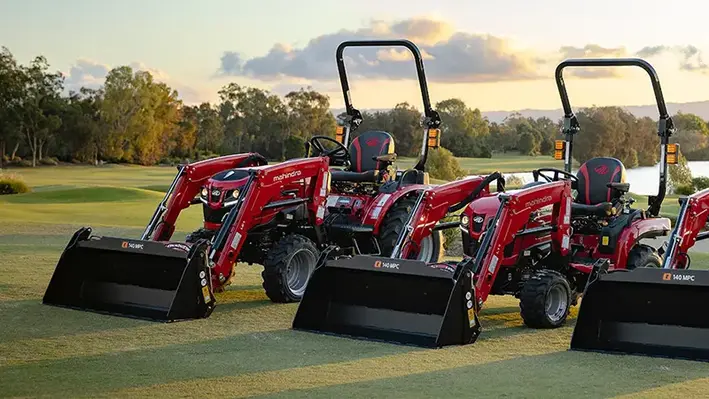
The collaboration brings together Mahindra’s advanced tractor engineering and CEAT’s trusted tyre technology. (Image credit: Mahindra)

In a significant boost to global agricultural innovation, CEAT Specialty has partnered with Mahindra & Mahindra (M&M) for the launch of the next-generation OJA tractor range in Australia

The collaboration brings together Mahindra’s advanced tractor engineering and CEAT’s trusted tyre technology, both designed to enhance performance and durability in challenging farming environments.

The OJA series, introduced in Brisbane in September 2025, represents Mahindra’s commitment to modern, efficient, and farmer-friendly machinery. As the world’s largest tractor manufacturer by volume, Mahindra has chosen CEAT as its first-source tyre supplier for this new generation of tractors. Ahead of the launch, CEAT supplied complete, ready-to-fit tyre assemblies from its Ambernath facility, ensuring seamless integration for both Farm/Industrial and Turf applications.

CEAT Specialty’s tyres are already well-recognised in Australia for their reliability across diverse terrain. The company’s engineering team worked closely with Mahindra’s experts to create a range of tyres tailored to Australian agricultural needs. The line-up includes:

FARMAX – delivering superior traction and long-lasting durability for farming.

TYROCK Super X3 – engineered for industrial performance with loaders and backhoes.

TURF XL – ensuring gentle soil compaction and smooth operation for hobby farmers.

Built tough to withstand Australia’s demanding conditions, Mahindra’s OJA tractors combine power, comfort, and advanced features. With innovations such as a button-operated PTO, digital driver display, enhanced hydraulics, and power steering, these tractors offer precision and ease for both professional and small-scale farmers.

Amit Tolani, Chief Executive of CEAT Specialty, said: “We are proud to partner with Mahindra once again, this time for their future-ready OJA launch in Australia. Our tyres are engineered to deliver performance across industries and applications. This partnership is another step forward in our journey with Mahindra, and a strong example of how CEAT is enabling farmers worldwide with trusted, efficient products.”

Ravindra S Shahane, Head of Global Product Planning & International Operations at M&M, said, “We are proud to introduce the globally acclaimed Mahindra OJA tractor range in an important market like Australia… This extension into Australia further strengthens the bond between the two brands.”

Through this partnership, CEAT Specialty strengthens its role as a global OEM partner, empowering farmers with dependable, high-performance tyres that support modern agriculture worldwide.

Top Stories

Grid List

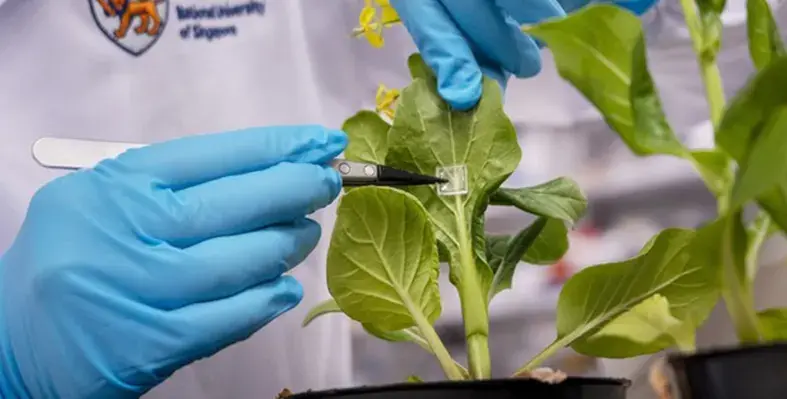
NUS develops microneedle system for faster plant growth. (Image credit: NUS)

Fertilizers & Pesticides

Researchers at the National University of Singapore (NUS) have unveiled a cutting-edge microneedle biofertiliser system that could redefine sustainable agriculture and precision farming.

The innovative technology uses dissolving microneedle patches to deliver living biofertilisers directly into plant tissue, bypassing soil-related limitations and significantly improving efficiency.

In controlled greenhouse trials, leafy vegetables such as Choy Sum and Kale showed faster and healthier growth, recording higher shoot biomass, increased leaf area and greater height all while using over 15 per cent less biofertiliser compared to conventional soil inoculation. This breakthrough highlights a promising pathway to reduce fertiliser waste and minimise environmental impact.

Traditionally, biofertilisers  beneficial bacteria and fungi that enhance nutrient uptake and stress tolerance are applied to soil, where they face competition from native microbes and adverse conditions. The NUS approach sidesteps these challenges by delivering microbes straight into leaves or stems, enabling faster and more targeted results.

“Inspired by how microbes can migrate within the human body, we hypothesised that by delivering beneficial microbes directly into the plant's tissues, like a leaf or stem, they could travel to the roots and still perform their function, but much more effectively and be less vulnerable to soil conditions,” said Assistant Professor Andy Tay from the Department of Biomedical Engineering at NUS, who led the study.

The plant-friendly microneedles, made from biodegradable polyvinyl alcohol (PVA), dissolve within a minute of application, releasing their microbial payload gently into the plant. Laboratory tests confirmed minimal tissue disruption, stable chlorophyll levels and a rapid return to normal stress markers, underscoring the system’s safety and viability.

The team successfully delivered a plant growth-promoting rhizobacteria (PGPR) cocktail directly into plant tissue, outperforming soil-based treatments. Importantly, growth response correlated with microbial dosage up to an optimal threshold, allowing growers to determine the lowest effective dose and cut costs.

“Our microneedle system successfully delivered biofertiliser into Choy Sum and Kale, enhancing their growth more effectively than traditional methods while using over 15 per cent less biofertiliser,” Asst Prof Tay said. “By faster growth we refer to higher total plant weight, larger leaf area and higher plant height.”

With strong potential for urban farming, vertical farms and high-value crops, the researchers are now exploring scalability, automation and wider crop trials. This pioneering “microneedle biofertiliser” concept positions smart agri-tech at the forefront of eco-friendly, future-ready farming.

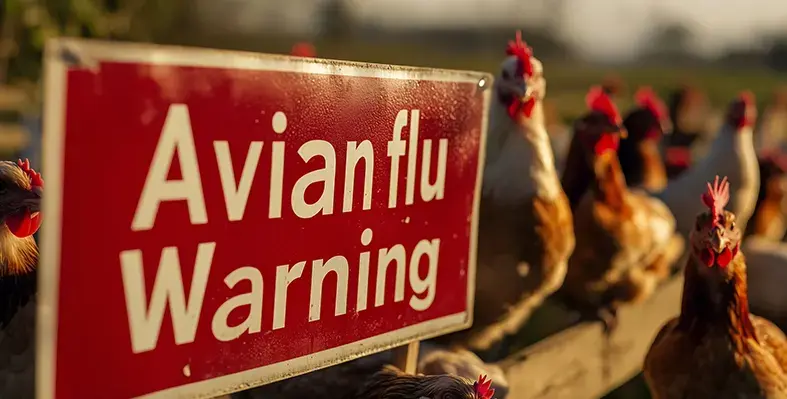
Avian flu viruses is raising concerns over poultry health, food security and regional egg supplies.

Poultry

Highly pathogenic avian influenza (HPAI) continues to spread across East and West Asia, with new outbreaks affecting poultry farms in countries including the Philippines, Japan, South Korea, Taiwan, Iraq and Israel.

The resurgence of the H5 group of avian flu viruses is raising concerns over poultry health, food security and regional egg supplies.

Among Asian nations, the Philippines has reported the highest number of new poultry outbreaks in recent days. Over the past 10 days, the country’s animal health authorities confirmed 10 outbreaks of HPAI to the World Organisation for Animal Health (WOAH). Most involved the H5N1 virus, particularly in Isabela province in northern Luzon, affecting both large commercial farms and smaller backyard flocks. These latest cases bring the total number of outbreaks on Luzon over the past four years to 293, impacting around 2.35 million birds through culling or mortality.

New detections have also been reported in Mindanao, including South Cotabato, Davao del Sur and North Cotabato, involving grazing ducks infected with H5N1 and H5N8 strains. Authorities cite contact with infected birds and contaminated fomites as the likely sources of infection. As of 31 December, only one active outbreak remains under investigation in Central Luzon.

In Japan, five additional H5N1 outbreaks were confirmed between late December and early January, mainly affecting large laying hen farms. These cases raise the country’s total outbreaks since October to 13, with more than 3.87 million poultry directly affected. Further suspected cases are currently under review.

The spread of avian flu has significantly disrupted South Korea’s egg supply, prompting the government to import over 2.2 million eggs from the United States in January. Since October, South Korea has confirmed 34 poultry outbreaks, including a notable case involving the H5N9 virus, detected for the first time in domestic birds.

Elsewhere in East Asia, Taiwan reported a new H5N1 outbreak in early January, affecting nearly 60,000 laying hens in Chiayi county. In western Asia, H5N1 has re-emerged in Israel and Iraq, with infections linked to contact with wild birds.

With outbreaks spanning multiple regions and virus strains, authorities warn that enhanced biosecurity, surveillance and rapid response will be critical to limiting further spread across Asia’s poultry sector.

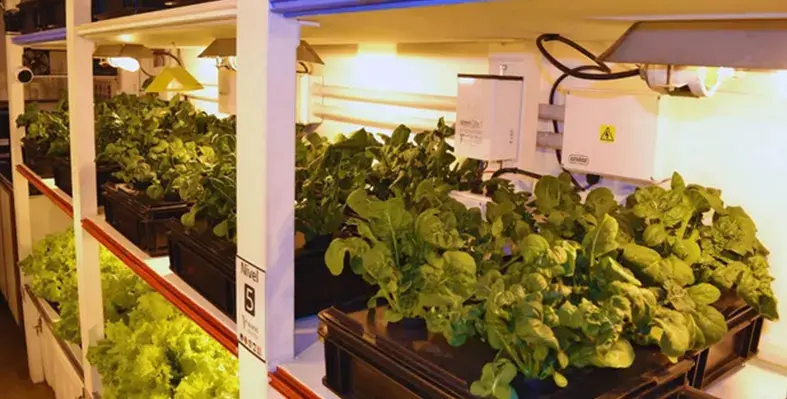
The initiative is part of the PDTS call.(Image credit: INTA)

Equipment

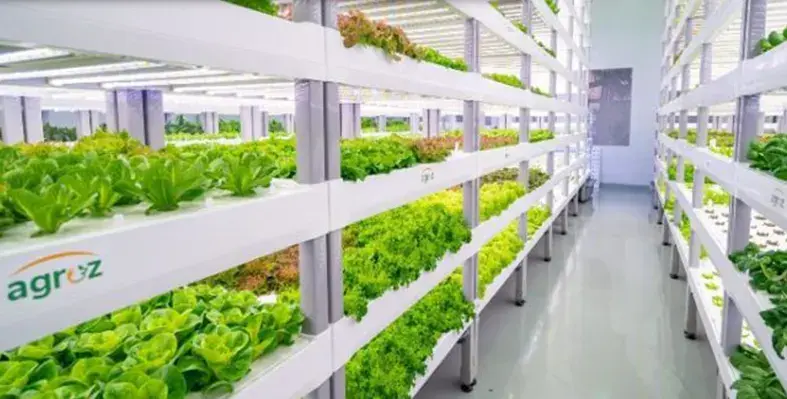
INTA and the National University of La Matanza (UNLAM) are working on the optimisation and fine-tuning of a compact, controlled and affordable hydroponic system designed to enable the domestic production of fresh food in small spaces and under variable climatic conditions.

The prototype builds on the experience gained through the Antarctic Hydroponic Production Module (MAPHI).

INTA and UNLAM are jointly developing a module aimed at facilitating vegetable production in reduced spaces, regardless of external climatic variability. The goal is for the final prototype to be economically accessible and simple enough to be used by anyone in a household setting.

The project originates from the know-how developed through MAPHI, a system designed to produce vegetables under the extreme conditions of Antarctica. Drawing on that experience, INTA Santa Cruz, in collaboration with the National University of La Matanza, is now adapting and optimising the technology at a smaller scale, specifically targeted at domestic use.

Jorge Birgi, researcher at the INTA Santa Cruz Experimental Station, said,"we were able to design a production module that condenses the technologies used in the Antarctic system, while adding new features. Given the scale, this is a module that allows a family to produce their own food."

The initial objective was to transform a highly complex system, originally conceived for hostile and isolated environments, into a compact, efficient and economically accessible prototype capable of producing fresh food in limited spaces and under variable climatic conditions.

Martín Díaz, project director overseeing the optimisation phase,said, "this collaboration will provide technical tools that strengthen the prototype and make it possible to reach the goal of developing a product that can be commercialised."

Among its defining features, Díaz explained that "the module is designed to produce vegetables independently of external environmental conditions. It controls all key variables — temperature, light and nutrients  to ensure production regardless of location."

During its deployment in Antarctica, the MAPHI project led to the development of a complete technological package. This included compatible substrates, specific seed types, seed treatments and dedicated protocols. A tailored nutrient solution adapted to Antarctic conditions was also developed, along with a monitoring system incorporating sensors and custom-designed electronic boards. These components allowed data to be collected, processed and presented in a way that was easy for operators to interpret.

At this stage, efforts are focused on transforming MAPHI's technologies into a product that can be utilised by society and the productive sector. In other words, the project that proved capable of producing vegetables under extreme Antarctic conditions is now being used as a springboard for the development of commercial products.

In this regard, Birgi noted that "to achieve this objective, the MAPHI team developed a reduced-size prototype that incorporates new functionalities, making it easier to operate in a domestic environment."

Through the joint project, INTA and UNLAM will now contribute a business plan aimed at turning the prototype developed by the Santa Cruz Experimental Station into a commercial product. This phase will include a market study to identify potential user profiles, as well as the development of an intuitive interface allowing the system to be managed via a mobile phone application.

The final outcome will consist of a series of technical documents defining target users, the final price of the production system, the data collection platform to be used, and the materials required for construction.

The initiative is part of the Technological and Social Development Project (PDTS) call, a joint programme promoted by Argentina's National Interuniversity Council (CIN) and the European Union (UNIUEAR).

The latest generation of Braud harvesters demonstrates impressive versatility across a wide range of vineyard structures. (Image credit: New Holland)

Machinery & Equipment

New Holland Agriculture continues to set new standards in modern viticulture with its acclaimed Braud grape harvester range - a series celebrated globally for precision, productivity and long-lasting reliability.

Built on decades of specialist expertise, the Braud brand has become synonymous with exceptional grape-harvesting performance, and under the New Holland umbrella it remains a trusted partner for winemakers seeking both efficiency and gentle crop handling.

Each Braud harvester reflects a signature blend of engineering excellence and vineyard-friendly design. The machines are created to treat vines with care while delivering powerful harvesting capability, ensuring that grapes are collected cleanly and with minimal damage. This focus on protecting fruit integrity directly enhances vineyard productivity and supports the production of higher-quality wines.

The latest generation of Braud harvesters demonstrates impressive versatility across a wide range of vineyard structures. With both high-capacity and extra-high-capacity models, including the popular 9000 L and 9000 X series, the range adapts effortlessly to narrow boutique vineyards, expansive commercial estates, and even sloped terrain. Their advanced systems  such as the industry-proven Noria basket conveying system, optional destemmer technology, and innovative side-conveyor configurations  ensure consistently clean, gentle and efficient fruit handling.
This adaptability makes Braud harvesters an ideal choice for growers looking to streamline operations while maintaining strict quality standards. Backed by a global legacy and trusted by thousands of vineyard operators, these machines are built to deliver season after season, reducing labour needs, improving harvest speed, and preserving overall vine health.

Engineered for durability and operator comfort, the Braud range combines robust construction with intuitive controls, offering ease of use without compromising on precision. The result is a harvester that not only boosts productivity but also supports sustainable agricultural practices, helping vineyards reduce waste and optimise long-term output.

Choosing a Braud grape harvester means investing in a heritage of innovation, reliability and world-leading vineyard technology  giving growers confidence in every harvest and reinforcing New Holland’s reputation as a champion of next-generation viticulture solutions.