




vc.web.local

twitter Linkedin acp Contact Us

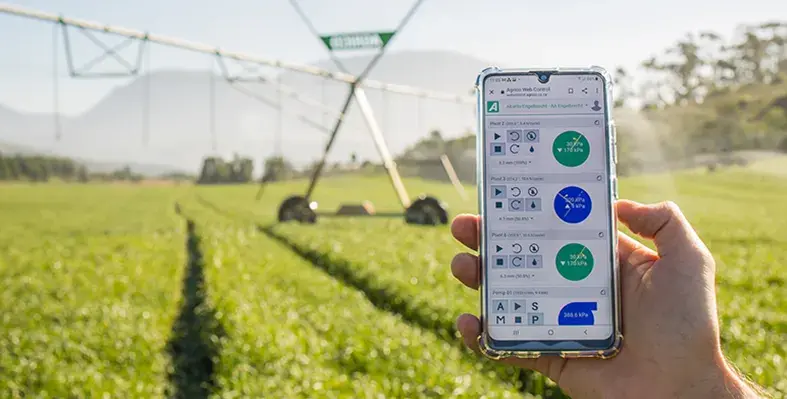
Agrico Web Control offers a cutting-edge solution for farmers seeking efficiency.

Agrico Web Control is redefining how farmers manage irrigation, offering a fully remote and intelligent system that can be accessed from any internet-connected device

This innovative solution allows users to oversee and operate all aspects of their irrigation infrastructure from centre pivots to pumps through a single, integrated platform.

Designed to simplify the complexities of large-scale farming operations, Web Control gives farmers real-time visibility and control over key elements such as dam levels, valves, irrigation blocks, and pump stations. Whether you're in the field or across the globe, you can monitor and manage your irrigation systems with just a smartphone, tablet, or computer.

One of the standout features is Agrico Advanced RAIN, which automates centre pivot irrigation based on water pressure. It helps detect and alert users to any system irregularities, enabling swift response and reducing downtime. Key capabilities include detailed sector configuration, alert triggers, historical performance tracking, and instant SMS or missed call notifications when status changes occur.

Complementing this is the Agrico Pump Controller, which ensures efficient and intelligent pump management. It supports a variety of starter systems including direct-on-line, star-delta, soft starters, and variable speed drives (VSDs). This tool automates operations, optimises energy use, and supports the integration of additional sensors for flow, vibration, and level monitoring.

A notable enhancement to the platform is its GPS-based end-pressure control. Especially useful for farms with uneven terrain, this feature allows the system to track the final tower in a centre pivot and monitor pressure levels at that point. When possible, the pump’s speed is automatically reduced, conserving energy without compromising performance.

Salinla Seehaphan, Corporate Affairs Director, Nestlé (Thai) Ltd., said,“Marketing cannot be done the same way year after year and expect different results it’s madness.”

With energy-saving features, intelligent automation, and comprehensive system integration, Agrico Web Control offers a cutting-edge solution for farmers seeking efficiency, sustainability, and precision in irrigation. 
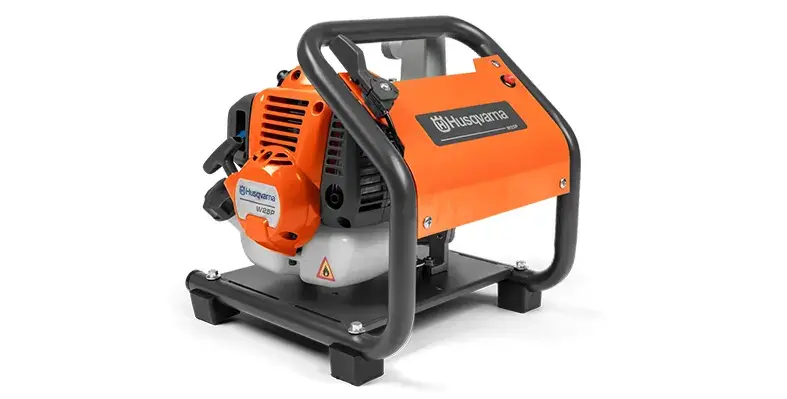
Roads and access points must be wide and clear enough for emergency vehicles.(Image credit: Husqvarna)

With rising global temperatures driving up the risk of wildfires, farmers across the Western Cape are being urged to take fire preparedness more seriously than ever

According to the Winelands Fire Protection Association, a single-degree increase in temperature raises the risk of fire by nearly 30%. This wasn’t just a statistic in theory during the summer of 2023/2024, over 6,000 fires tore through nearly 100,000 hectares in the region, marking one of the worst fire seasons in recent memory.

As another hot, dry summer approaches, Stefan de Ridder, chairperson of the association, has issued a stark warning: “It’s going to be another hell-raiser unless farmers focus on minimising the risks.” Beyond the physical destruction fires can bring, the legal and financial responsibilities weigh heavily on landowners. “If a fire starts on your farm, you’re legally and financially liable for all the damage it causes to other properties,” he explains.

Despite the common practice of creating firebreaks, de Ridder stresses that these alone are not enough. Comprehensive fire readiness involves a combination of access, equipment, training, and understanding the environment. Roads and access points must be wide and clear enough for emergency vehicles, while tools such as chainsaws, water pumps, and fire beaters need to be in good working order. Staff should be properly trained in fire response and provided with protective gear, while emergency contact numbers should be easily accessible.

Reliable water access is another essential factor. In many cases, farms rely on electricity to pump water which may not be an option during power outages. This is where portable, petrol-powered pumps come in. De Ridder particularly recommends high-pressure units for tackling underground fires, especially in sensitive areas like fynbos where roots may continue to smoulder unseen.

Understanding how different vegetation behaves during a fire is also critical. Trees like gum and even green pinecones can explode when burning, increasing danger and spreading fire more rapidly. That’s why periodic, controlled burns are sometimes necessary not just for safety, but for the health of the ecosystem. “Periodic fires are therefore essential for protea germination and sustainability,” de Ridder says, “and when they aren’t burnt, old proteas die and become hazardous fire fuel.”

He trusts Husqvarna equipment for this work, citing the brand’s reliability, affordability, and portability. “The W25P is great for transferring water and the 321SP high-pressure pump means I don’t have to dig up fynbos roots to make sure they’re not alight.”

De Ridder’s fire-fighting approach includes strategically placing vehicles equipped with pumps and water tanks near hotspots, turning natural water sources like streams into assets during a fire. “Fire is a natural part of our ecosystems,” he concludes. “So we need to be prepared. With the right tools and knowledge, we can protect our farms and ensure their resilience in the face of wildfires.”

ScoutAI is capable of identifying issues before they become widespread, enabling timely interventions.

CultiWise ScoutAI, an advanced autonomous crop monitoring system, has been shortlisted for the prestigious DLG Agrifuture Concept Winner Award

Developed by Czech agritech startup Skymaps, the system combines artificial intelligence with data from satellites, drones, sprayers, and field sensors to help farmers detect crop issues earlier and apply treatments more precisely.

Traditionally, crop scouting has been a manual and time-consuming task, with farmers walking fields to identify problems like pests, disease, or nutrient deficiencies. ScoutAI transforms this process by automating surveillance and decision-making. The system fuses data from multiple sources—satellite imagery, drone flights, smart sprayer cameras, and in-field sensors—into one integrated platform. This allows for faster, more accurate detection of crop stress and reduces dependency on isolated tools and manual monitoring.

ScoutAI is capable of identifying issues before they become widespread, enabling timely interventions. The precision and early detection mean inputs like fertilisers, pesticides, and water can be used more efficiently. Farmers using the system have reported savings of up to 50% on fertiliser and water, and over 60% on pesticide usage. In addition to cutting costs and environmental impact, ScoutAI also saves time and labour, offering farmers a constant digital overview of their fields.

A major strength of ScoutAI is its interoperability. Many existing agricultural tools—such as drones, sprayer logs, and weather apps—operate independently, often without the ability to integrate. In contrast, ScoutAI brings these tools together into a single intelligent system. It acts like a smart security network for crops, continuously monitoring fields and spotting anomalies, such as unexpected bare patches or weed outbreaks.

Once a potential issue is detected using daily satellite imagery, ScoutAI automatically deploys farm drones housed in smart docking stations around the field. These drones fly to the affected area, capturing close-up, high-resolution images. Onboard AI processes this data in real time. Simultaneously, cameras installed on the sprayer booms offer live insights as they move through the field, while in-ground sensors monitor microclimate conditions and pest activity.

All the collected data is analysed on the cloud-based CultiWise platform, which then provides farmers with clear, actionable recommendations. This includes prescription maps for precise, variable-rate treatments such as spot spraying. The entire process, from detection to diagnosis, takes just minutes and is displayed through a user-friendly dashboard.

By integrating and automating previously disconnected tools, ScoutAI is redefining how farmers monitor and manage their crops—making agriculture smarter, more sustainable, and more efficient.

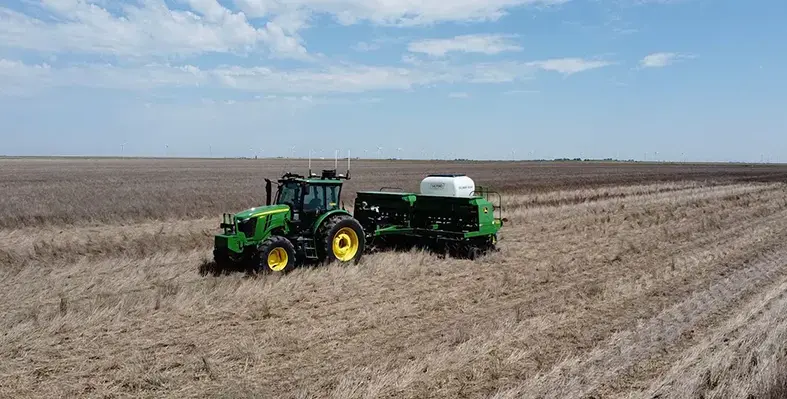
Sabanto launches tractor tech revolution in Australia.(Image credit: Sabanto)

In a bold move set to reshape the future of farming, US-based agricultural technology company Sabanto has officially expanded its autonomous tractor technology to Australia

The company’s innovative retrofit systems, which transform standard tractors into fully autonomous workhorses, are now available to Australian farmers through strategic partnerships with OneAg and Vantage NSW.

This marks Sabanto’s first major international expansion and a significant milestone for agri-tech in Australia. Instead of requiring costly investment in new machinery, Sabanto’s technology offers a smarter, cost-effective solution by upgrading the equipment farmers already trust and use.

“Australia’s agricultural sector is highly innovative, and we’re eager to partner with local experts to deliver affordable autonomy to farmers,” said Craig Rupp, CEO and Founder of Sabanto. “Together with OneAg and Vantage NSW, we’re helping farmers adopt this technology with the local expertise and service they already trust.”

Sabanto’s retrofit autonomy kits integrate seamlessly with a wide range of existing tractors, enabling 24/7 operation without the need for constant human supervision. This leap forward not only improves labour efficiency but also allows producers to tackle time-sensitive tasks such as seeding and spraying with greater precision and reliability.

The partnership with OneAg, a leader in precision agriculture, reflects a shared vision for the future of farm operations. “Autonomy represents one of the biggest shifts in how we’ll approach farming over the next decade,” said Michael Munro, Head of Autonomy at OneAg. “Sabanto’s technology allows us to expand what’s possible for productivity. I’m excited to lead this next chapter and work closely with our partners and customers to make autonomous farming a reality.”

Vantage NSW, another key collaborator, brings in-depth knowledge of precision ag systems across the full farming lifecycle. Founder and Director Michael Casey shared, “Our customers want smarter ways to do more with the equipment they already own. Partnering with Sabanto allows us to deliver advanced autonomy solutions, helping farmers improve efficiency while addressing labour and cost challenges.”

The introduction of autonomous retrofits into the Australian market is especially timely, with producers across the country facing increasing pressure from rising input costs, unpredictable labour availability, and extreme weather patterns. Sabanto’s systems help mitigate these challenges while positioning farms for long-term digital transformation.

As Sabanto builds its international dealer network, this expansion underscores a global shift in agriculturewhere smarter, smaller, and more adaptable technologies are paving the way for scalable, sustainable farming solutions.

Top Stories

Grid List

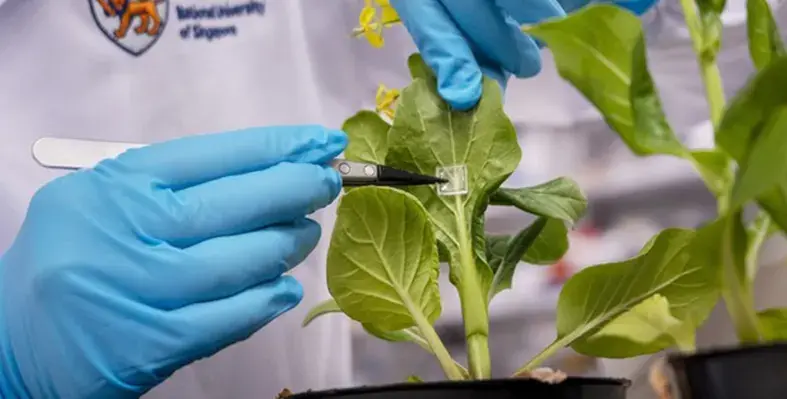
NUS develops microneedle system for faster plant growth. (Image credit: NUS)

Fertilizers & Pesticides

Researchers at the National University of Singapore (NUS) have unveiled a cutting-edge microneedle biofertiliser system that could redefine sustainable agriculture and precision farming.

The innovative technology uses dissolving microneedle patches to deliver living biofertilisers directly into plant tissue, bypassing soil-related limitations and significantly improving efficiency.

In controlled greenhouse trials, leafy vegetables such as Choy Sum and Kale showed faster and healthier growth, recording higher shoot biomass, increased leaf area and greater height all while using over 15 per cent less biofertiliser compared to conventional soil inoculation. This breakthrough highlights a promising pathway to reduce fertiliser waste and minimise environmental impact.

Traditionally, biofertilisers  beneficial bacteria and fungi that enhance nutrient uptake and stress tolerance are applied to soil, where they face competition from native microbes and adverse conditions. The NUS approach sidesteps these challenges by delivering microbes straight into leaves or stems, enabling faster and more targeted results.

“Inspired by how microbes can migrate within the human body, we hypothesised that by delivering beneficial microbes directly into the plant's tissues, like a leaf or stem, they could travel to the roots and still perform their function, but much more effectively and be less vulnerable to soil conditions,” said Assistant Professor Andy Tay from the Department of Biomedical Engineering at NUS, who led the study.

The plant-friendly microneedles, made from biodegradable polyvinyl alcohol (PVA), dissolve within a minute of application, releasing their microbial payload gently into the plant. Laboratory tests confirmed minimal tissue disruption, stable chlorophyll levels and a rapid return to normal stress markers, underscoring the system’s safety and viability.

The team successfully delivered a plant growth-promoting rhizobacteria (PGPR) cocktail directly into plant tissue, outperforming soil-based treatments. Importantly, growth response correlated with microbial dosage up to an optimal threshold, allowing growers to determine the lowest effective dose and cut costs.

“Our microneedle system successfully delivered biofertiliser into Choy Sum and Kale, enhancing their growth more effectively than traditional methods while using over 15 per cent less biofertiliser,” Asst Prof Tay said. “By faster growth we refer to higher total plant weight, larger leaf area and higher plant height.”

With strong potential for urban farming, vertical farms and high-value crops, the researchers are now exploring scalability, automation and wider crop trials. This pioneering “microneedle biofertiliser” concept positions smart agri-tech at the forefront of eco-friendly, future-ready farming.

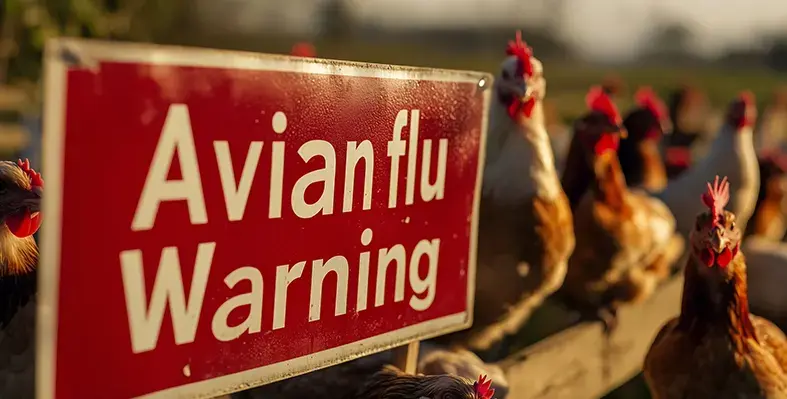
Avian flu viruses is raising concerns over poultry health, food security and regional egg supplies.

Poultry

Highly pathogenic avian influenza (HPAI) continues to spread across East and West Asia, with new outbreaks affecting poultry farms in countries including the Philippines, Japan, South Korea, Taiwan, Iraq and Israel.

The resurgence of the H5 group of avian flu viruses is raising concerns over poultry health, food security and regional egg supplies.

Among Asian nations, the Philippines has reported the highest number of new poultry outbreaks in recent days. Over the past 10 days, the country’s animal health authorities confirmed 10 outbreaks of HPAI to the World Organisation for Animal Health (WOAH). Most involved the H5N1 virus, particularly in Isabela province in northern Luzon, affecting both large commercial farms and smaller backyard flocks. These latest cases bring the total number of outbreaks on Luzon over the past four years to 293, impacting around 2.35 million birds through culling or mortality.

New detections have also been reported in Mindanao, including South Cotabato, Davao del Sur and North Cotabato, involving grazing ducks infected with H5N1 and H5N8 strains. Authorities cite contact with infected birds and contaminated fomites as the likely sources of infection. As of 31 December, only one active outbreak remains under investigation in Central Luzon.

In Japan, five additional H5N1 outbreaks were confirmed between late December and early January, mainly affecting large laying hen farms. These cases raise the country’s total outbreaks since October to 13, with more than 3.87 million poultry directly affected. Further suspected cases are currently under review.

The spread of avian flu has significantly disrupted South Korea’s egg supply, prompting the government to import over 2.2 million eggs from the United States in January. Since October, South Korea has confirmed 34 poultry outbreaks, including a notable case involving the H5N9 virus, detected for the first time in domestic birds.

Elsewhere in East Asia, Taiwan reported a new H5N1 outbreak in early January, affecting nearly 60,000 laying hens in Chiayi county. In western Asia, H5N1 has re-emerged in Israel and Iraq, with infections linked to contact with wild birds.

With outbreaks spanning multiple regions and virus strains, authorities warn that enhanced biosecurity, surveillance and rapid response will be critical to limiting further spread across Asia’s poultry sector.

The initiative is part of the PDTS call.(Image credit: INTA)

Equipment

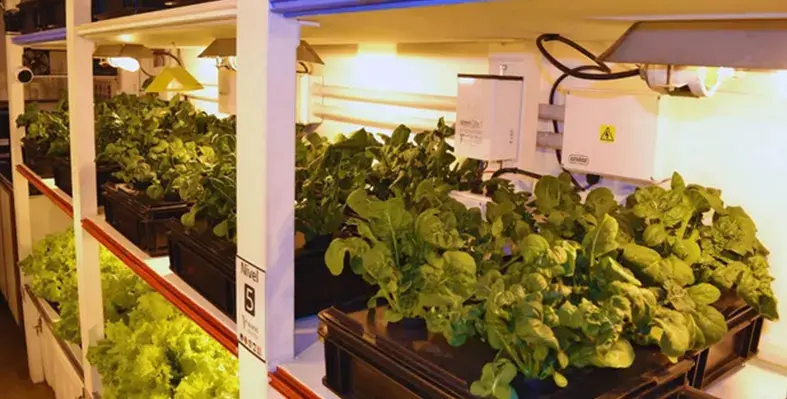
INTA and the National University of La Matanza (UNLAM) are working on the optimisation and fine-tuning of a compact, controlled and affordable hydroponic system designed to enable the domestic production of fresh food in small spaces and under variable climatic conditions.

The prototype builds on the experience gained through the Antarctic Hydroponic Production Module (MAPHI).

INTA and UNLAM are jointly developing a module aimed at facilitating vegetable production in reduced spaces, regardless of external climatic variability. The goal is for the final prototype to be economically accessible and simple enough to be used by anyone in a household setting.

The project originates from the know-how developed through MAPHI, a system designed to produce vegetables under the extreme conditions of Antarctica. Drawing on that experience, INTA Santa Cruz, in collaboration with the National University of La Matanza, is now adapting and optimising the technology at a smaller scale, specifically targeted at domestic use.

Jorge Birgi, researcher at the INTA Santa Cruz Experimental Station, said,"we were able to design a production module that condenses the technologies used in the Antarctic system, while adding new features. Given the scale, this is a module that allows a family to produce their own food."

The initial objective was to transform a highly complex system, originally conceived for hostile and isolated environments, into a compact, efficient and economically accessible prototype capable of producing fresh food in limited spaces and under variable climatic conditions.

Martín Díaz, project director overseeing the optimisation phase,said, "this collaboration will provide technical tools that strengthen the prototype and make it possible to reach the goal of developing a product that can be commercialised."

Among its defining features, Díaz explained that "the module is designed to produce vegetables independently of external environmental conditions. It controls all key variables — temperature, light and nutrients  to ensure production regardless of location."

During its deployment in Antarctica, the MAPHI project led to the development of a complete technological package. This included compatible substrates, specific seed types, seed treatments and dedicated protocols. A tailored nutrient solution adapted to Antarctic conditions was also developed, along with a monitoring system incorporating sensors and custom-designed electronic boards. These components allowed data to be collected, processed and presented in a way that was easy for operators to interpret.

At this stage, efforts are focused on transforming MAPHI's technologies into a product that can be utilised by society and the productive sector. In other words, the project that proved capable of producing vegetables under extreme Antarctic conditions is now being used as a springboard for the development of commercial products.

In this regard, Birgi noted that "to achieve this objective, the MAPHI team developed a reduced-size prototype that incorporates new functionalities, making it easier to operate in a domestic environment."

Through the joint project, INTA and UNLAM will now contribute a business plan aimed at turning the prototype developed by the Santa Cruz Experimental Station into a commercial product. This phase will include a market study to identify potential user profiles, as well as the development of an intuitive interface allowing the system to be managed via a mobile phone application.

The final outcome will consist of a series of technical documents defining target users, the final price of the production system, the data collection platform to be used, and the materials required for construction.

The initiative is part of the Technological and Social Development Project (PDTS) call, a joint programme promoted by Argentina's National Interuniversity Council (CIN) and the European Union (UNIUEAR).

The latest generation of Braud harvesters demonstrates impressive versatility across a wide range of vineyard structures. (Image credit: New Holland)

Machinery & Equipment

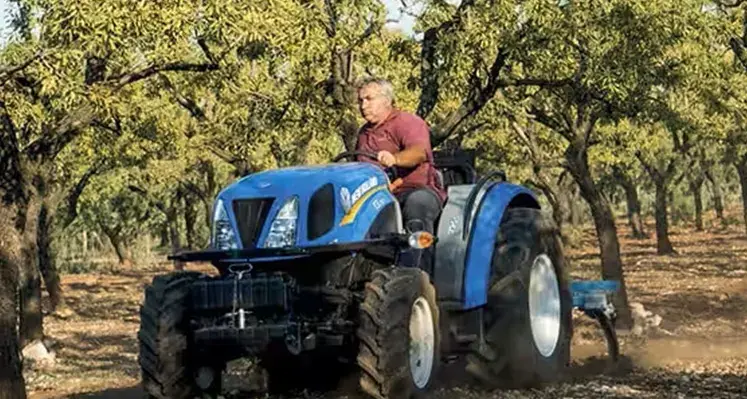
New Holland Agriculture continues to set new standards in modern viticulture with its acclaimed Braud grape harvester range - a series celebrated globally for precision, productivity and long-lasting reliability.

Built on decades of specialist expertise, the Braud brand has become synonymous with exceptional grape-harvesting performance, and under the New Holland umbrella it remains a trusted partner for winemakers seeking both efficiency and gentle crop handling.

Each Braud harvester reflects a signature blend of engineering excellence and vineyard-friendly design. The machines are created to treat vines with care while delivering powerful harvesting capability, ensuring that grapes are collected cleanly and with minimal damage. This focus on protecting fruit integrity directly enhances vineyard productivity and supports the production of higher-quality wines.

The latest generation of Braud harvesters demonstrates impressive versatility across a wide range of vineyard structures. With both high-capacity and extra-high-capacity models, including the popular 9000 L and 9000 X series, the range adapts effortlessly to narrow boutique vineyards, expansive commercial estates, and even sloped terrain. Their advanced systems  such as the industry-proven Noria basket conveying system, optional destemmer technology, and innovative side-conveyor configurations  ensure consistently clean, gentle and efficient fruit handling.
This adaptability makes Braud harvesters an ideal choice for growers looking to streamline operations while maintaining strict quality standards. Backed by a global legacy and trusted by thousands of vineyard operators, these machines are built to deliver season after season, reducing labour needs, improving harvest speed, and preserving overall vine health.

Engineered for durability and operator comfort, the Braud range combines robust construction with intuitive controls, offering ease of use without compromising on precision. The result is a harvester that not only boosts productivity but also supports sustainable agricultural practices, helping vineyards reduce waste and optimise long-term output.

Choosing a Braud grape harvester means investing in a heritage of innovation, reliability and world-leading vineyard technology  giving growers confidence in every harvest and reinforcing New Holland’s reputation as a champion of next-generation viticulture solutions.