



cb.web.local

twitter Linkedin acp Contact Us

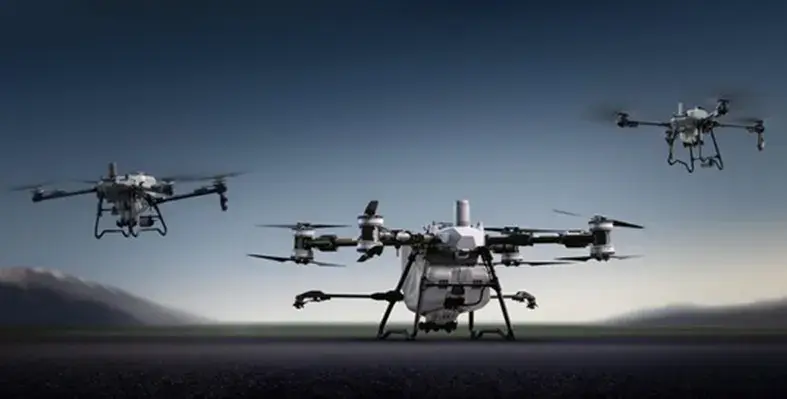
The new Agras drones are designed to handle bigger jobs and suit a range of farming tasks.(Image Credit: DJI)

DJI, the global leader in drone and camera technology, has officially launched its latest agricultural drones - the Agras T100, T70P, and T25P — for worldwide use.

These new models represent the next step in DJI agriculture’s development, offering more power, smarter features, and greater efficiency for farming operations of all sizes.

With over 12 years of research and development behind them, the new Agras drones are designed to handle bigger jobs and suit a range of farming tasks, from spraying and spreading to lifting. Each drone is built with advanced safety features and automated systems to support smarter, safer, and more efficient farming.

Agras T100: for large-scale farming

The Agras T100 is built for commercial farming, with a maximum payload of 100 litres for spraying, 150 litres for spreading, or 100 kilograms for lifting. It has a top operating speed of 20 m/s, making it twice as efficient as the previous model. Its powerful safety system includes LiDAR, millimetre-wave radar, and a Penta-Vision system, helping it navigate safely and operate with high accuracy.

Agras T70P: balanced power and efficiency

Designed for a wide range of uses, the Agras T70P can spray with 70 litres, spread with 100 litres, or lift up to 65 kilograms. Like the T100, it reaches speeds of up to 20 m/s and includes a fine mist spraying system. It features the Safety System 3.0 with improved obstacle detection using radar and a Tri-Vision system.

Agras T25P: compact and ideal for solo use

The T25P keeps its compact, foldable frame, making it ideal for single-person use. It includes the new 25 kg high-precision screw feeder system for spreading and the Safety System 3.0. It is well-suited for smaller farms or precision tasks, with full automation for mapping and plant protection.

New training for drone pilots

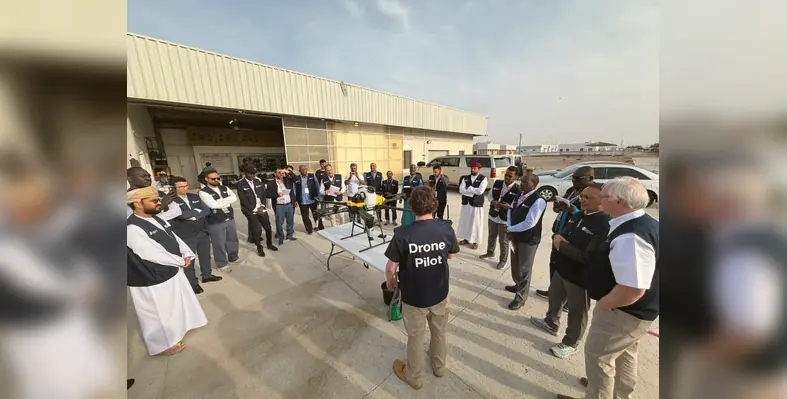
DJI is also rolling out new pilot training courses under the DJI Academy, starting in 15 countries across the Americas and Asia. These courses will teach safe flying, efficient spraying and spreading, and how to get the most out of DJI’s agricultural drones.The new Agras drones will first be available in Southeast Asia.

Yuan Zhang, head of global sales at DJI Agriculture, said, “We are proud to launch these advanced drones to support global farming. They help growers feed communities while reducing the environmental impact on our planet.”
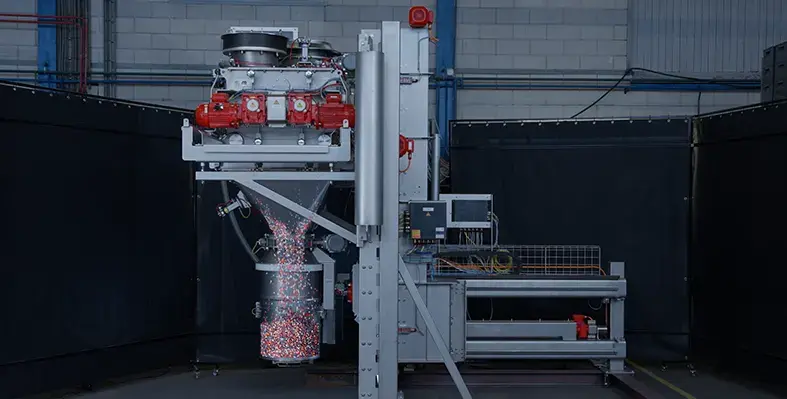
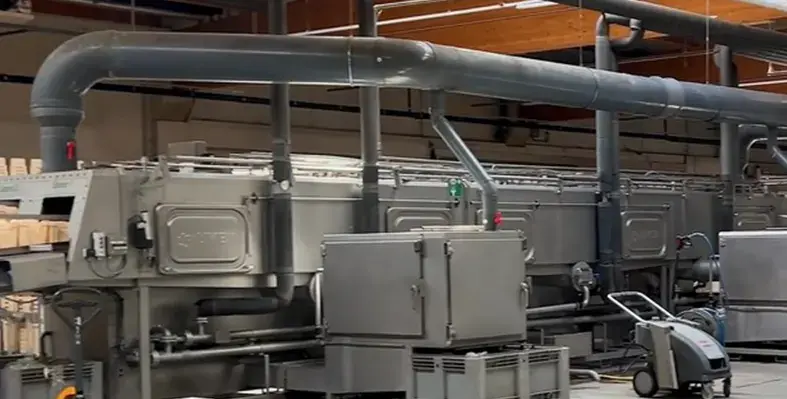
Pegasus Moving Mixer is perfect for industries where hygiene and safety are vital. (Image credit: Dinnissen)

Dinnissen has launched the Pegasus Moving Mixer, a new fully automated mixing system designed for compact production environments

This innovative solution combines safety, hygiene, and precision in one smart, space-efficient unit. The Pegasus Moving Mixer works with movable barrels and mixers, allowing automated handling from start to finish. The barrel containing unmixed product is automatically lifted, rotated, and connected to the Pegasus mixer, where its contents are discharged for mixing. A nitrogen system creates an inert environment before mixing, reducing explosion risks. During the process, liquids and additives are sprayed evenly, ensuring a homogenous mix with no waste.

Once mixing is complete, the mixer moves up and the barrel returns to its position for discharge. The product is returned to the same barrel, without any demixing. This closed-loop process is dust-free, air-free and fully hygienic, making it ideal for food and chemical production.

The system is also highly compact and easy to clean. The unique interaction between the moving mixer and barrel, the Pegasus Moving Mixer makes optimal use of limited floor space. It is fully enclosed, accessible, and designed with safety in mind.

It has fully enclosed system for hygienic operation, even liquid and additive distribution for consistent results, and inert mixing environment with nitrogen injection for explosion safety highlight its advanced safety and hygiene features. With "no manual steps: filling, mixing and discharge are fully automated,” it offers ease of use and consistency. Its compact design ideal for tight production setups makes it suitable for various production environments. Perfect for industries where hygiene and safety are vital, the Pegasus Moving Mixer offers a modern, efficient alternative to traditional systems. 

Zoomlion showcases tailored solutions for Africa’s growth at China-Africa Economic and Trade Expo. (Image source: Zoomlion)

Zoomlion Heavy Industry Science & Technology Co., Ltd. took centre stage at the 4th China-Africa Economic and Trade Expo in Changsha, China, from 12 to 15 June, showcasing its latest agricultural and engineering machinery solutions tailored specifically for the African market

Since making its entry into Africa in 2007, Zoomlion has played an integral role in infrastructure development and agricultural modernisation across the continent. The company has also been committed to nurturing local talent, evident in its ongoing technical training programmes, such as those provided to Ugandan farmers to enhance agricultural skill sets.

At the trade expo, Zoomlion displayed a comprehensive line-up of machinery, ranging from construction cranes and earthmoving equipment to aerial work platforms and advanced agricultural machinery. These products are engineered to withstand and perform efficiently in Africa’s diverse and often demanding working conditions.

Zoomlion’s footprint in Africa has expanded significantly over the past 18 years. The company has delivered more than 10,000 units of equipment to markets across the continent, establishing itself as one of Africa’s leading machinery suppliers. In addition to setting up subsidiaries in key markets like South Africa, Nigeria, Kenya, and Tanzania, Zoomlion has developed a robust after-sales infrastructure. This includes spare parts centres in Algeria and South Africa, a joint-venture manufacturing plant in Algeria, and an expanding network of dealers and service providers across the region.

The company has also been instrumental in supporting critical infrastructure projects throughout Africa. These include Egypt’s New Administrative Capital—home to Africa’s tallest skyscraper at 385.8 metres—the Julius Nyerere Hydropower Project in Tanzania, which boosts the country’s energy capacity nearly fourfold, and the N'Djamena Stadium in Chad, designed to host international sports and cultural events. Another notable contribution is the Rosso Bridge, linking Senegal and Mauritania, which will enhance regional trade and connectivity.

Zoomlion’s growth trajectory in Africa continues to accelerate. Sales in the first quarter of 2025 alone accounted for 60% of the total recorded in 2024, underlining rising demand for its solutions. As of May 2025, the company’s Africa team comprised over 300 employees, with more than 90% of them being locally hired—demonstrating Zoomlion’s commitment to job creation and skills development in the region.

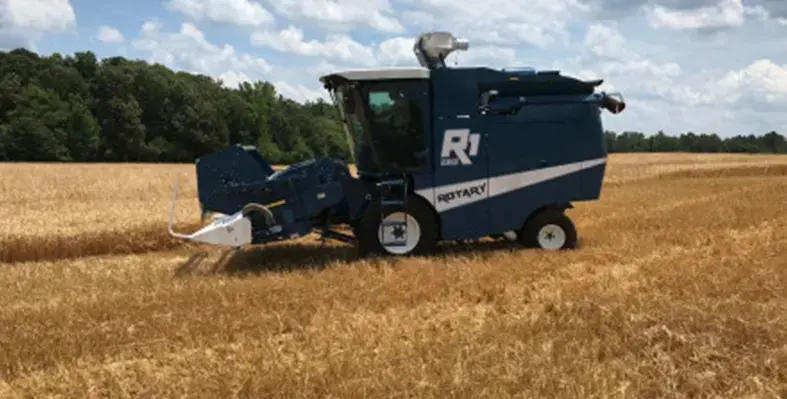
The R1 Single-Plot Research Combine by Alamco. (Image source: Alamco)

The R1 Single-Plot Research Combine by Alamco is designed to provide quick harvest without damaging the seeds

This is made possible by its advanced rotary technology that allows optimisation of the harvest process and improve data accuracy.

Unlike conventional plot combines that rely on high-speed threshing cylinders, R1 utilises exclusive top-fed axial rotors. This innovative design gently pulls material into the threshing chamber, which is over eight feet long, enabling higher throughput and greater efficiency. Operating at lower RPMs (350-500), the R1's rotary technology allows for the early harvest of large green plants, tough stems, and high-foliage crops, giving researchers a longer harvest window for faster decision-making. The self-cleaning system ensures easier cleanout and more pure samples for more reliable seed research data.

Equipped with Cummins QSF 3.8L FT4 Diesel Engine and Poclain rear Torque King 4WD wheel motors and tandem electronically controlled hydraulics, it delivers superior performance in tough field conditions.

Top Stories

Grid List

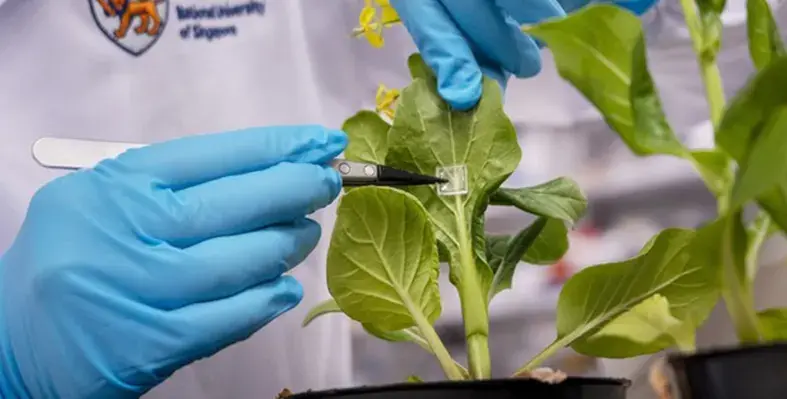
NUS develops microneedle system for faster plant growth. (Image credit: NUS)

Fertilizers & Pesticides

Researchers at the National University of Singapore (NUS) have unveiled a cutting-edge microneedle biofertiliser system that could redefine sustainable agriculture and precision farming.

The innovative technology uses dissolving microneedle patches to deliver living biofertilisers directly into plant tissue, bypassing soil-related limitations and significantly improving efficiency.

In controlled greenhouse trials, leafy vegetables such as Choy Sum and Kale showed faster and healthier growth, recording higher shoot biomass, increased leaf area and greater height all while using over 15 per cent less biofertiliser compared to conventional soil inoculation. This breakthrough highlights a promising pathway to reduce fertiliser waste and minimise environmental impact.

Traditionally, biofertilisers  beneficial bacteria and fungi that enhance nutrient uptake and stress tolerance are applied to soil, where they face competition from native microbes and adverse conditions. The NUS approach sidesteps these challenges by delivering microbes straight into leaves or stems, enabling faster and more targeted results.

“Inspired by how microbes can migrate within the human body, we hypothesised that by delivering beneficial microbes directly into the plant's tissues, like a leaf or stem, they could travel to the roots and still perform their function, but much more effectively and be less vulnerable to soil conditions,” said Assistant Professor Andy Tay from the Department of Biomedical Engineering at NUS, who led the study.

The plant-friendly microneedles, made from biodegradable polyvinyl alcohol (PVA), dissolve within a minute of application, releasing their microbial payload gently into the plant. Laboratory tests confirmed minimal tissue disruption, stable chlorophyll levels and a rapid return to normal stress markers, underscoring the system’s safety and viability.

The team successfully delivered a plant growth-promoting rhizobacteria (PGPR) cocktail directly into plant tissue, outperforming soil-based treatments. Importantly, growth response correlated with microbial dosage up to an optimal threshold, allowing growers to determine the lowest effective dose and cut costs.

“Our microneedle system successfully delivered biofertiliser into Choy Sum and Kale, enhancing their growth more effectively than traditional methods while using over 15 per cent less biofertiliser,” Asst Prof Tay said. “By faster growth we refer to higher total plant weight, larger leaf area and higher plant height.”

With strong potential for urban farming, vertical farms and high-value crops, the researchers are now exploring scalability, automation and wider crop trials. This pioneering “microneedle biofertiliser” concept positions smart agri-tech at the forefront of eco-friendly, future-ready farming.

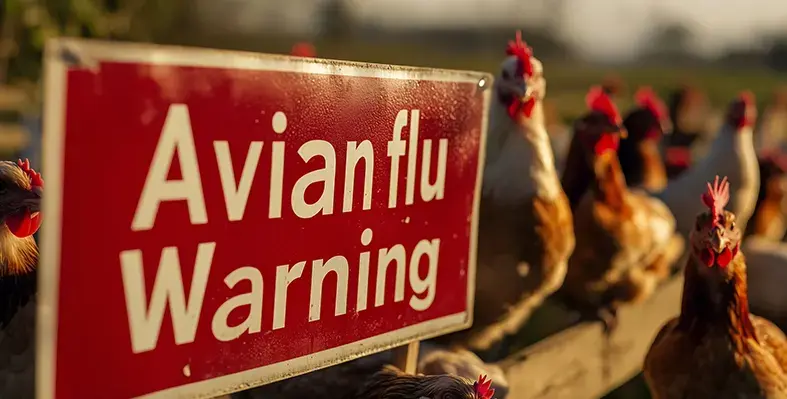
Avian flu viruses is raising concerns over poultry health, food security and regional egg supplies.

Poultry

Highly pathogenic avian influenza (HPAI) continues to spread across East and West Asia, with new outbreaks affecting poultry farms in countries including the Philippines, Japan, South Korea, Taiwan, Iraq and Israel.

The resurgence of the H5 group of avian flu viruses is raising concerns over poultry health, food security and regional egg supplies.

Among Asian nations, the Philippines has reported the highest number of new poultry outbreaks in recent days. Over the past 10 days, the country’s animal health authorities confirmed 10 outbreaks of HPAI to the World Organisation for Animal Health (WOAH). Most involved the H5N1 virus, particularly in Isabela province in northern Luzon, affecting both large commercial farms and smaller backyard flocks. These latest cases bring the total number of outbreaks on Luzon over the past four years to 293, impacting around 2.35 million birds through culling or mortality.

New detections have also been reported in Mindanao, including South Cotabato, Davao del Sur and North Cotabato, involving grazing ducks infected with H5N1 and H5N8 strains. Authorities cite contact with infected birds and contaminated fomites as the likely sources of infection. As of 31 December, only one active outbreak remains under investigation in Central Luzon.

In Japan, five additional H5N1 outbreaks were confirmed between late December and early January, mainly affecting large laying hen farms. These cases raise the country’s total outbreaks since October to 13, with more than 3.87 million poultry directly affected. Further suspected cases are currently under review.

The spread of avian flu has significantly disrupted South Korea’s egg supply, prompting the government to import over 2.2 million eggs from the United States in January. Since October, South Korea has confirmed 34 poultry outbreaks, including a notable case involving the H5N9 virus, detected for the first time in domestic birds.

Elsewhere in East Asia, Taiwan reported a new H5N1 outbreak in early January, affecting nearly 60,000 laying hens in Chiayi county. In western Asia, H5N1 has re-emerged in Israel and Iraq, with infections linked to contact with wild birds.

With outbreaks spanning multiple regions and virus strains, authorities warn that enhanced biosecurity, surveillance and rapid response will be critical to limiting further spread across Asia’s poultry sector.

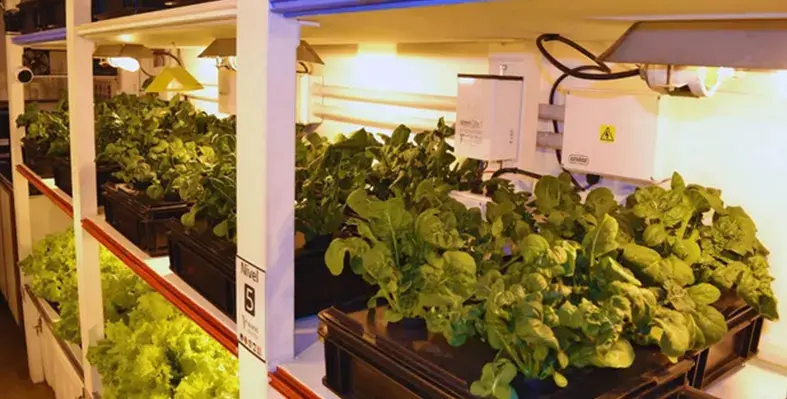
The initiative is part of the PDTS call.(Image credit: INTA)

Equipment

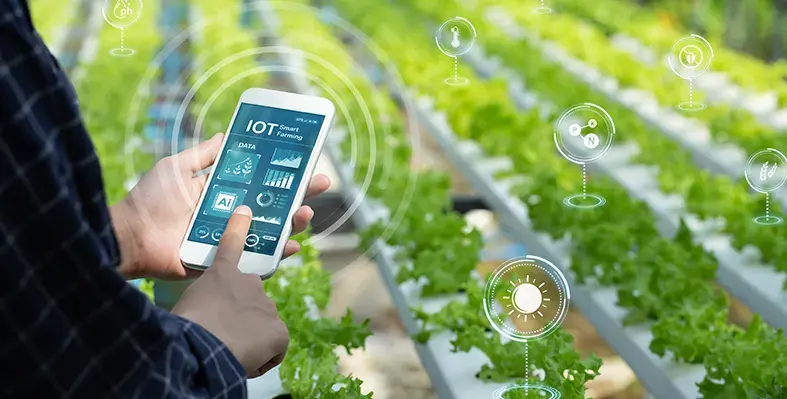
INTA and the National University of La Matanza (UNLAM) are working on the optimisation and fine-tuning of a compact, controlled and affordable hydroponic system designed to enable the domestic production of fresh food in small spaces and under variable climatic conditions.

The prototype builds on the experience gained through the Antarctic Hydroponic Production Module (MAPHI).

INTA and UNLAM are jointly developing a module aimed at facilitating vegetable production in reduced spaces, regardless of external climatic variability. The goal is for the final prototype to be economically accessible and simple enough to be used by anyone in a household setting.

The project originates from the know-how developed through MAPHI, a system designed to produce vegetables under the extreme conditions of Antarctica. Drawing on that experience, INTA Santa Cruz, in collaboration with the National University of La Matanza, is now adapting and optimising the technology at a smaller scale, specifically targeted at domestic use.

Jorge Birgi, researcher at the INTA Santa Cruz Experimental Station, said,"we were able to design a production module that condenses the technologies used in the Antarctic system, while adding new features. Given the scale, this is a module that allows a family to produce their own food."

The initial objective was to transform a highly complex system, originally conceived for hostile and isolated environments, into a compact, efficient and economically accessible prototype capable of producing fresh food in limited spaces and under variable climatic conditions.

Martín Díaz, project director overseeing the optimisation phase,said, "this collaboration will provide technical tools that strengthen the prototype and make it possible to reach the goal of developing a product that can be commercialised."

Among its defining features, Díaz explained that "the module is designed to produce vegetables independently of external environmental conditions. It controls all key variables — temperature, light and nutrients  to ensure production regardless of location."

During its deployment in Antarctica, the MAPHI project led to the development of a complete technological package. This included compatible substrates, specific seed types, seed treatments and dedicated protocols. A tailored nutrient solution adapted to Antarctic conditions was also developed, along with a monitoring system incorporating sensors and custom-designed electronic boards. These components allowed data to be collected, processed and presented in a way that was easy for operators to interpret.

At this stage, efforts are focused on transforming MAPHI's technologies into a product that can be utilised by society and the productive sector. In other words, the project that proved capable of producing vegetables under extreme Antarctic conditions is now being used as a springboard for the development of commercial products.

In this regard, Birgi noted that "to achieve this objective, the MAPHI team developed a reduced-size prototype that incorporates new functionalities, making it easier to operate in a domestic environment."

Through the joint project, INTA and UNLAM will now contribute a business plan aimed at turning the prototype developed by the Santa Cruz Experimental Station into a commercial product. This phase will include a market study to identify potential user profiles, as well as the development of an intuitive interface allowing the system to be managed via a mobile phone application.

The final outcome will consist of a series of technical documents defining target users, the final price of the production system, the data collection platform to be used, and the materials required for construction.

The initiative is part of the Technological and Social Development Project (PDTS) call, a joint programme promoted by Argentina's National Interuniversity Council (CIN) and the European Union (UNIUEAR).

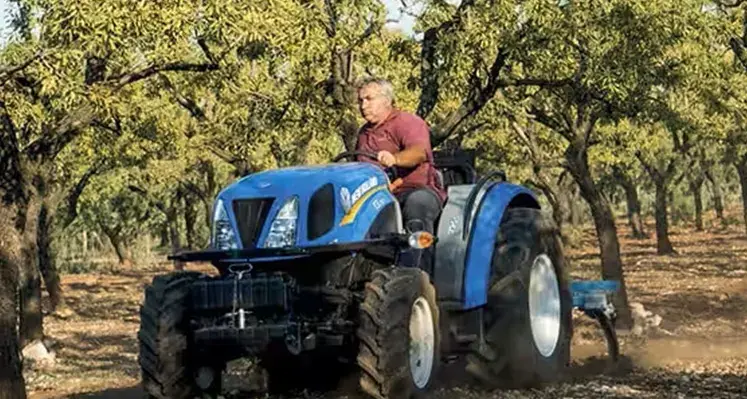
The latest generation of Braud harvesters demonstrates impressive versatility across a wide range of vineyard structures. (Image credit: New Holland)

Machinery & Equipment

New Holland Agriculture continues to set new standards in modern viticulture with its acclaimed Braud grape harvester range - a series celebrated globally for precision, productivity and long-lasting reliability.

Built on decades of specialist expertise, the Braud brand has become synonymous with exceptional grape-harvesting performance, and under the New Holland umbrella it remains a trusted partner for winemakers seeking both efficiency and gentle crop handling.

Each Braud harvester reflects a signature blend of engineering excellence and vineyard-friendly design. The machines are created to treat vines with care while delivering powerful harvesting capability, ensuring that grapes are collected cleanly and with minimal damage. This focus on protecting fruit integrity directly enhances vineyard productivity and supports the production of higher-quality wines.

The latest generation of Braud harvesters demonstrates impressive versatility across a wide range of vineyard structures. With both high-capacity and extra-high-capacity models, including the popular 9000 L and 9000 X series, the range adapts effortlessly to narrow boutique vineyards, expansive commercial estates, and even sloped terrain. Their advanced systems  such as the industry-proven Noria basket conveying system, optional destemmer technology, and innovative side-conveyor configurations  ensure consistently clean, gentle and efficient fruit handling.
This adaptability makes Braud harvesters an ideal choice for growers looking to streamline operations while maintaining strict quality standards. Backed by a global legacy and trusted by thousands of vineyard operators, these machines are built to deliver season after season, reducing labour needs, improving harvest speed, and preserving overall vine health.

Engineered for durability and operator comfort, the Braud range combines robust construction with intuitive controls, offering ease of use without compromising on precision. The result is a harvester that not only boosts productivity but also supports sustainable agricultural practices, helping vineyards reduce waste and optimise long-term output.

Choosing a Braud grape harvester means investing in a heritage of innovation, reliability and world-leading vineyard technology  giving growers confidence in every harvest and reinforcing New Holland’s reputation as a champion of next-generation viticulture solutions.