





vc.web.local

twitter Linkedin acp Contact Us

International Production & Processing Expo IPPE 2026

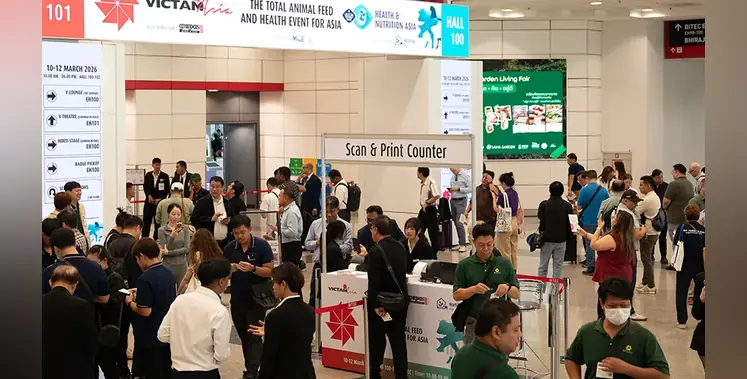
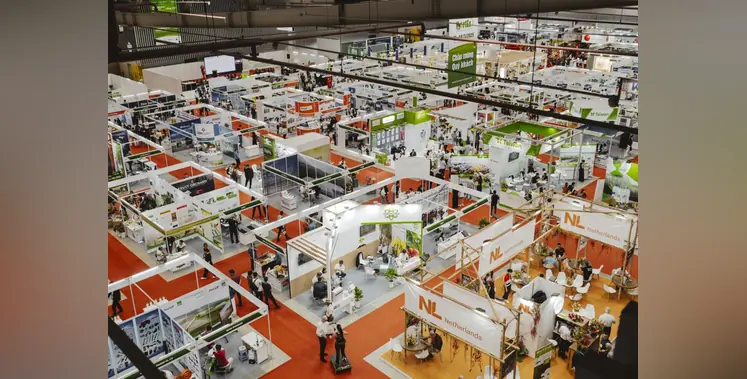
IPPE unites experts from production, processing, manufacturing and allied services. (Image credit: IPPE)

International Production & Processing Expo IPPE stands as the largest annual trade exhibition serving the global meat, poultry, egg and animal food industries.

Hosted every year at the Georgia World Congress Center in Atlanta, Georgia, USA, the event acts as a powerful meeting point for industry professionals seeking insight into the latest developments shaping the protein supply chain.

IPPE unites experts from production, processing, manufacturing and allied services, offering direct access to cutting edge technology, equipment, supplies and solutions. Formed by the collaboration of the International Feed Expo, International Meat Expo and International Poultry Expo, the event draws a truly international audience. Senior decision makers, executives, engineers, researchers and operations leaders attend from across the globe, representing businesses ranging from animal feed producers to poultry processors and egg specialists.

With thousands of exhibitors spread across vast exhibition halls, IPPE provides a comprehensive showcase of innovation. Recent editions have welcomed over 1,300 exhibitors and nearly 31,000 registered attendees, highlighting its growing influence within the sector. Visitors benefit from hands on engagement with suppliers, early exposure to emerging technologies and valuable networking opportunities that support long term business growth.

The expo is carefully organised into dedicated zones covering animal nutrition, animal health, rendering, egg production, live production, food safety, worker safety and meat and poultry processing and packaging. Beyond the exhibition floor, IPPE delivers a strong educational programme, featuring expert led seminars, TECHTalks, product launches, career development initiatives and leadership recognition events.

As a strictly business to business event, attendance is reserved for industry professionals. Revenue generated is reinvested into research, education, public relations, crisis management and regulatory support, ensuring lasting value for the sectors it serves. Overall, IPPE remains a vital global platform for innovation, collaboration and industry advancement.

Top Stories

Grid List

Vietnam’s meat imports exceed US$2bn as demand climbs.

Food & Commodity

Vietnam’s appetite for imported meat continued to grow in 2025, with total purchases surpassing US$2bn for the first time.

The country imported around 978,300 tonnes of meat and meat products during the year, reflecting strong consumer demand and expanding needs within the food processing sector.

Figures compiled by the Import and Export Department under the Ministry of Industry and Trade, together with the General Department of Customs, show that Vietnam spent more than US$2.004bn on meat imports in 2025. Compared with the previous year, import volumes rose by 11.6 per cent, while the overall value increased by 12.2 per cent. The rise points to a steady shift in consumption patterns, with more households and businesses turning to imported animal protein.

India remained Vietnam’s largest supplier. The country exported 188,700 tonnes of meat to Vietnam, valued at US$681.32mn, accounting for nearly one fifth of total import volume.

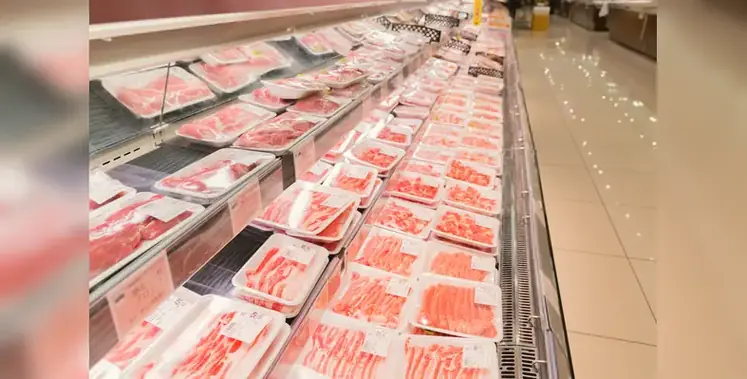
Frozen pork was one of the fastest growing segments. Imports reached 183,400 tonnes, worth US$418.54mn. This marked an increase of 18.75 per cent in volume and almost 21 per cent in value compared with 2024.

Vietnam relied heavily on Russia for frozen pork, which supplied 48.44 per cent of total imports in this category. Brazil followed with a 30.91 per cent share, underlining the importance of both countries in meeting Vietnam’s protein needs.

The average import price of frozen pork stood at roughly US$2,273 per tonne. This increase came at a time when domestic live hog prices in early 2026 fluctuated between USD 2.65 and 3.30 per kilogramme, creating additional pressure along the supply chain.

While imports surged, exports remained limited. In 2025, Vietnam exported only 22,300 tonnes of meat, generating US$116.49mn in revenue. Hong Kong remained the largest destination for Vietnamese meat, although shipments to the market declined by more than 21 per cent compared with the previous year.

The figures highlight a widening gap between Vietnam’s import demand and its export capacity, as domestic consumption continues to outpace overseas sales.

Hong Kong Suspends Poultry Imports from Argentina and Japan Over Bird Flu Fears.

Poultry

Hong Kong's food safety authorities have moved swiftly to halt poultry imports from specific regions in Argentina and Japan following confirmed outbreaks of highly pathogenic H5 avian influenza.

The Centre for Food Safety (CFS), operating under the Food and Environmental Hygiene Department, issued the suspension after receiving alerts from both the World Organisation for Animal Health (WOAH) and Japan's Ministry of Agriculture, Forestry and Fisheries. The affected areas include Lobos Partido in Buenos Aires Province and Marcos Juarez Department in Córdoba Province in Argentina, alongside Hokkaido Prefecture in Japan.
The ban covers all poultry meat, related products, and poultry eggs arriving from these regions and came into force immediately.

Trade figures from the Census and Statistics Department paint a clear picture of just how significant these supply chains are. Hong Kong brought in roughly 2,080 tonnes of frozen poultry meat from Argentina last year alone. From Japan, the figures were even more considerable, with approximately 2,390 tonnes of frozen poultry meat and nearly 298 million poultry eggs making their way into the city.

A CFS spokesman noted that "the CFS has contacted the Argentinian and Japanese authorities over the issues and will closely monitor information issued by the WOAH and the relevant authorities on the avian influenza outbreaks. Appropriate action will be taken in response to the development of the situation."

Consumers can expect authorities to keep a close watch as the situation develops.

Limex unveils Modular 8 washing system for crates. (Image credit: Limex)

Equipment

Limex has unveiled its latest innovation in industrial washing technology with the introduction of the Modular 8, a highly flexible and configurable washing machine platform designed for crates, seed trays, flower buckets and floats.

The new line marks a significant shift towards modular engineering, allowing customers to build exactly the washing solution they need using standardised components rather than costly custom-built systems.

Unlike traditional crate and tray washers that often require extensive engineering work to meet specific customer requirements, the Modular 8 is built from individual modules that connect seamlessly into a single washing line. These include pre-wash units, one or more main wash modules, rinse sections and blow-off units. This modular approach enables users to tailor the system precisely to their operational layout, hygiene standards and processing capacity.

By installing multiple main wash modules in sequence, the system increases soaking time and washing power, delivering higher throughput without compromising cleaning performance. Each standard module also offers multiple configuration options, such as higher-pressure pumps or advanced filtration technologies. The platform supports both left-hand and right-hand configurations, ensuring maximum flexibility for different production environments.

"With the Modular 8, we make it easier to choose exactly the configuration that matches the customer's capacity, hygiene requirements, and budget," says Joep Janssen, owner of Limex. "Our engineers have designed the machines in such a way that they follow each other seamlessly."

With a tunnel width of 800 millimetres, the Modular 8 is suitable for a broad range of applications, including harvest crates, seed trays, flower buckets and DWC floats. The system has also been designed with maintenance efficiency in mind. Improved accessibility of components simplifies cleaning, inspection and servicing, helping to reduce downtime and improve overall operational efficiency.

The Modular 8 builds on Limex’s reputation for proven, high-quality engineering. Constructed from robust stainless steel, the platform delivers durability, reliability and long service life. Twelve Modular 8 lines are already in operation across multiple countries, demonstrating strong market acceptance.

This launch sets the foundation for future developments, with the Modular 10, Modular 14 and Modular 18 planned to follow. These larger, configurable models will eventually replace Limex’s existing cart washers and big box washers, reinforcing the company’s commitment to modular, future-ready industrial washing solutions.

ROK aims to position itself at the forefront of green bio innovation.

Infrastructure

The Ministry of Agriculture, Food and Rural Affairs (MAFRA) has designated seven provinces Gyeonggi-do, Gangwon-do, Chungcheongnam-do, Gyeongsangbuk-do, Gyeongsangnam-do, Jeollabuk-do, and Jeollanam-do as the first-ever “Green Bio Industry Promotion Zones” in accordance with Article 15 of the Act on the Promotion of the Green Bio Industry.

This milestone marks a significant step in the Republic of Korea’s strategy to strengthen its green bioeconomy and drive sustainable industrial growth.

Introduced for the first time this year, the Green Bio Industry Promotion Zone system is designed to establish a comprehensive, region-led framework for business support. The initiative is built around provincial hubs where green bio companies, universities, research institutes, and essential infrastructure for technology verification and certification are closely integrated. Through this clustered approach, local governments are expected to play a leading role in nurturing innovation, accelerating technology transfer, and supporting market-ready solutions.

The selected zones were evaluated and designated following a rigorous assessment process. Key criteria included industrial growth potential, implementation capacity, policy relevance, and overall feasibility. This ensures that each province is well positioned to contribute effectively to the national green bio strategy while leveraging its own regional strengths and resources.

The green-bio industry itself is regarded as a next-generation growth engine, encompassing six major sectors: microorganisms, natural products, food materials, insects, seeds, and veterinary medical products. With the designation of the Green Bio Industry Development Zones, collaboration networks among provinces are expected to deepen. In parallel, processes for verification, evaluation, certification, and commercialisation of green bio technologies and products are set to accelerate, helping to create a dynamic and competitive innovation ecosystem.

MAFRA plans to support the designated provinces by granting eligibility to participate in government-funded infrastructure development projects, including the Green Bio Venture Campus and advanced biofoundries. In addition, policy incentives will be provided to companies operating within the zones, further encouraging private-sector participation and investment in sustainable bio-based industries.

To ensure accountability and continuous improvement, MAFRA will receive quarterly performance reports from the local governments managing the designated zones. Annual performance evaluations will also be conducted to closely monitor implementation progress. Importantly, the results of these evaluations will be reflected in the formulation of policies for the following year, reinforcing a results-driven and adaptive governance approach.

Through these measures, the ROK aims to position itself at the forefront of green bio innovation, fostering regional development while advancing a resilient, sustainable bioeconomy aligned with global green growth trends.